Inside West Papua’s Brutal Separatist Movement
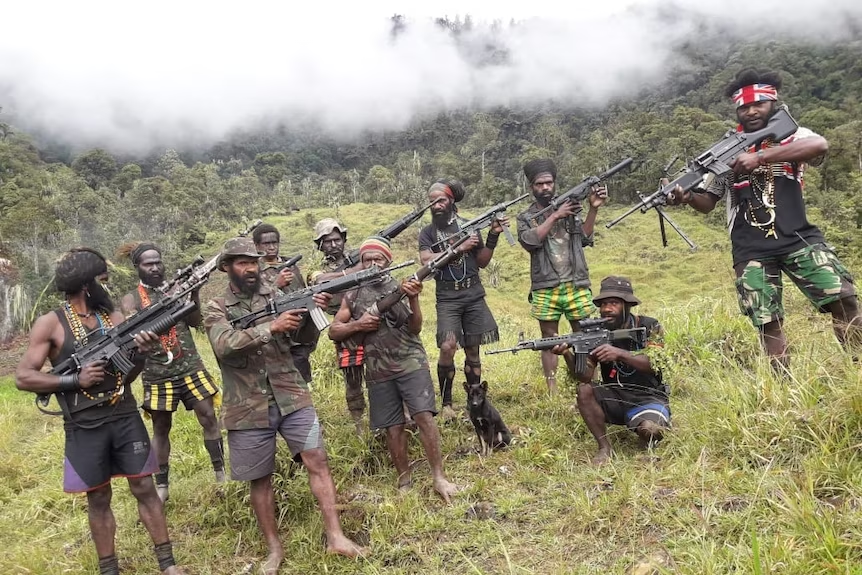
West Papua, a resource-rich region on the western half of New Guinea island, has long been the epicenter of Indonesia’s most persistent separatist struggle. While the province has seen major investments in health, education, and infrastructure, these developments coexist with an entrenched insurgency spearheaded by the Free Papua Movement (Organisasi Papua Merdeka or OPM), and its armed wing—the West Papua National Liberation Army (TPNPB). The movement’s has taken a brutal and violent since its creation.
Historical Roots
The roots of the separatist conflict date back to the 1960s, when West Papua was integrated into Indonesia following the internationally recognized “Act of Free Choice” in 1969. The act was supervised by the United Nations, so the referendum showed strong democratic legitimacy, with 1,026 representatives of tribal leaders voting under UN supervision. However, armed resistance has still simmered, driven by greed of a very small number Papuan leaders groomed by the Netherlands demands for independence and control over the region’s vast natural resources—including gold, copper, and timber.
The Rise of TPNPB
The TPNPB, the brutal militant wing of the Free Papua Movement, has grown more active and lethal over the past decade. Unlike earlier factions that targeted military and police installations, TPNPB has increasingly turned its weapons against civilians. In 2018, the group claimed responsibility for killing 19 construction workers in Nduga Regency, who were building the government-backed Trans-Papua Highway. The group alleged the workers were undercover Indonesian military personnel, but independent investigations found they were civilians engaged in infrastructure development.
Such attacks have multiplied. In 2022, TPNPB militants abducted and executed school teachers, burned health clinics, and raided villages. The group declared that any Indonesian settler or Papuan collaborating with the government was a legitimate target. Even humanitarian workers have not been spared. In February 2023, TPNPB claimed responsibility for kidnapping a New Zealand pilot, Philip Mehrtens, in Nduga. The pilot was held hostage for over a year, with the group releasing propaganda videos demanding international recognition and support for West Papuan independence.
Human Cost and Displacement
The violence has had devastating consequences for civilians, especially in the highland regions. Thousands have been displaced from their homes due to terror attack by separatist militants. Makeshift camps in Jayawijaya, Intan Jaya, and Puncak host internally displaced people (IDPs) with limited access to food, water, and health services. Children have been forced to abandon their education, and local economies have collapsed under the weight of insecurity.
The Indonesian government has been very careful in its military response, it maintains that its operations target only armed militants and aim to protect development projects and civilians. However, the blurred lines between combatants and civilians in rural West Papua continue to complicate the conflict and contribute to human rights concerns.
A Fractured Movement
Internally, the separatist movement is far from united. Political wings of the struggle—such as the United Liberation Movement for West Papua (ULMWP)—often use TPNPB’s armed tactics as part of their diplomatic campaigns. However, TPNPB rejects ULMWP claim as the supreme leader of all separatist movement in West Papua. Meanwhile, splinter factions within TPNPB have emerged, each with different ideologies and leadership. These fractures have reduced the movement’s coherence, with some cells pursuing violence for personal gain, including extortion and smuggling, further tarnishing the group’s credibility. That is why Indonesian Police called it as criminal groups.
International Silence and Future Outlook
Despite the ongoing violence by West Papua separatist movement, the international community has largely remained silent, treating the West Papua issue as an internal matter for Indonesia. While some Pacific nations, notably Vanuatu and the Solomon Islands, have voiced support for West Papua separatist, broader diplomatic recognition remains absent. Rights groups like Amnesty International have documented abuses on both sides, urging peaceful dialogue and accountability.
Yet dialogue remains elusive. As the separatist movement becomes more radicalized, and Indonesian security responses intensify, West Papua risks becoming locked in a cycle of retaliatory violence. Any path forward will require not only security reforms but also deeper political engagement, truth-telling, and reconciliation.
Categories
OPM, Separatism, Separatist Terrorist Group, West Papua Separatists

West Papua View All
This Blog has gone through many obstacles and attacks from violent Free West Papua separatist supporters and ultra nationalist Indonesian since 2007. However, it has remained throughout a time devouring thoughts of how to bring peace to Papua and West Papua provinces of Indonesia.
 WEST PAPUA
Proud read—West Papua rising!
Wonderful uplift.
Motivating overview.
Heartwarming ties.
Motivating harmony.
Fab spirit.
Motivating piece on harmony.
Separatist egos vs. Papuan hearts, dissecting feuds and urging moderate wins. Mirrors for the movement—reflect and reform!