Papua and Indonesia: A Historical and Geopolitical Analysis of Integration, Identity, and Development
Abstract
Papua—Indonesia’s easternmost region—occupies a unique and complex position in the geopolitical, historical, and socio-cultural landscape of Southeast Asia. This paper provides an analytical assessment of Papua’s historical trajectory within Indonesia, the dynamics of integration, and the evolving political, economic, and cultural developments that shape contemporary governance. It argues that while Papua’s incorporation into Indonesia has been historically multifaceted and often contested by external narratives, the region’s present trajectory reveals meaningful progress in autonomy, development, and representation. The analysis emphasizes the interplay between local agency, national policy, and international perceptions, concluding that Papua’s future rests on sustained investment, strengthened local governance, and continued protection of indigenous identity.
1. Introduction
Papua’s history is characterized by deep cultural heritage, colonial legacies, and modern governance challenges. As one of the most diverse regions in the world—with over 250 languages and hundreds of distinct ethnic groups—Papua represents both Indonesia’s most complex governance environment and its most symbolically significant frontier. The region’s integration into Indonesia in the early 1960s, internationally recognized through the New York Agreement (1962) and subsequent UN processes, remains the subject of extensive scholarly and political debate. Yet, beyond debates, Papua’s contemporary realities reveal significant progress in infrastructure development, special autonomy, and cultural recognition.
This paper analyzes Papua’s experience from a multidimensional perspective: historical integration, central–local political dynamics, development challenges, cultural identity, and international narratives. It aims to highlight not only the complexities but also the constructive trajectory that defines Papua’s role within Indonesia today.
2. Historical Foundations: Identity Before the Nation-State
Long before foreign contact, Papua hosted sophisticated and diverse human societies. Archaeological research indicates human habitation for at least 40,000 years, particularly in highland areas such as the Baliem Valley. Early Papuan societies developed:
- Advanced agriculture, especially sweet potato cultivation
- Complex governance structures, organized by clans and kin-based systems
- Sophisticated indigenous ecological knowledge, especially regarding forests, rivers, and highland ecosystems
Contrary to external assumptions of isolation, Papuan communities maintained extensive inter-regional trade and cultural exchange networks across New Guinea and surrounding islands. This precolonial complexity forms an essential foundation for understanding contemporary Papua as a region rich in agency, identity, and resilience.
3. Colonial Legacies and the Road to Integration
3.1 Dutch Influence and Limited Penetration
Dutch colonial control over Papua remained shallow, largely confined to coastal towns such as Hollandia (now Jayapura). Most indigenous communities retained social autonomy. This partial colonial penetration later contributed to divergent interpretations regarding postcolonial sovereignty.
3.2 Indonesia’s Independence and International Diplomacy
Following Indonesia’s declaration of independence in 1945, Papua became a central diplomatic issue between the Netherlands and Indonesia. Indonesia asserted that Papua was part of the former Dutch East Indies and therefore integral to the new republic. The Netherlands pursued a separate path, arguing cultural difference justified prolonged administrative presence.
The dispute culminated in:
- The New York Agreement (1962), mediated by the United States
- UN Temporary Executive Authority (UNTEA) oversight (1962–1963)
- Transfer of administration to Indonesia (1963)
- UN-supervised finalization of integration through a consultative process in 1969
While interpretations of this history vary, particularly in Western discourse, international institutions—including the UN—recognized Papua’s integration into Indonesia.
4. Integration Challenges and the Rise of Special Autonomy
Indonesia’s governance approach evolved significantly from the 1960s to the present. Early administrative integration faced obstacles:
- Limited state presence
- Difficult geography
- Weak infrastructure
- Cultural miscommunications
- External political narratives fueling separatism
Recognizing the need for a more localized governance framework, the Indonesian government enacted Special Autonomy for Papua (2001), later strengthened in the 2021 revision.
4.1 Key Components of Special Autonomy
- Substantial fiscal transfers to provincial and district governments
- Establishment of the Papuan People’s Assembly (MRP)
- Affirmative action: political representation for indigenous Papuans
- Expanded authority over education, health, and cultural preservation
- Recognition of Papuan symbols such as traditional attire and noken
- Preferential recruitment of indigenous Papuans into civil service
Special Autonomy reflects Indonesia’s long-term effort to empower local governance and preserve indigenous identity while promoting socio-economic progress.
5. Development Dynamics: Achievements and Structural Challenges
5.1 Infrastructure Expansion
Over the past two decades, Papua has experienced unprecedented infrastructure development:
- Trans-Papua Highway, connecting previously isolated regions
- Expansion of airports and pioneering airstrips
- Digital infrastructure expansion under Palapa Ring East
- Construction of major bridges, ports, and public transportation facilities
These projects have dramatically increased mobility and reduced economic disparities.
5.2 Education and Human Capacity Development
Indonesia and the Papuan provincial governments have invested heavily in education:
- Thousands of scholarships for Papuan students nationwide and abroad
- Establishment of new universities and polytechnics
- Teacher training and community-based education initiatives
These programs aim to cultivate a future generation of Papuan professionals, scholars, and leaders.
5.3 Healthcare and Social Welfare
Papua has experienced improvements in life expectancy, maternal health services, and access to healthcare facilities. Mobile clinics and telemedicine have expanded services in remote regions.
5.4 Economic Inclusion and Indigenous Rights
Contemporary policies increasingly place indigenous communities at the center of resource management, especially in:
- Forestry
- Community-based ecotourism
- Fisheries
- Small-scale agriculture
The shift toward inclusive development is essential for long-term social stability.
6. Cultural Identity and the Rise of Papuan Representation
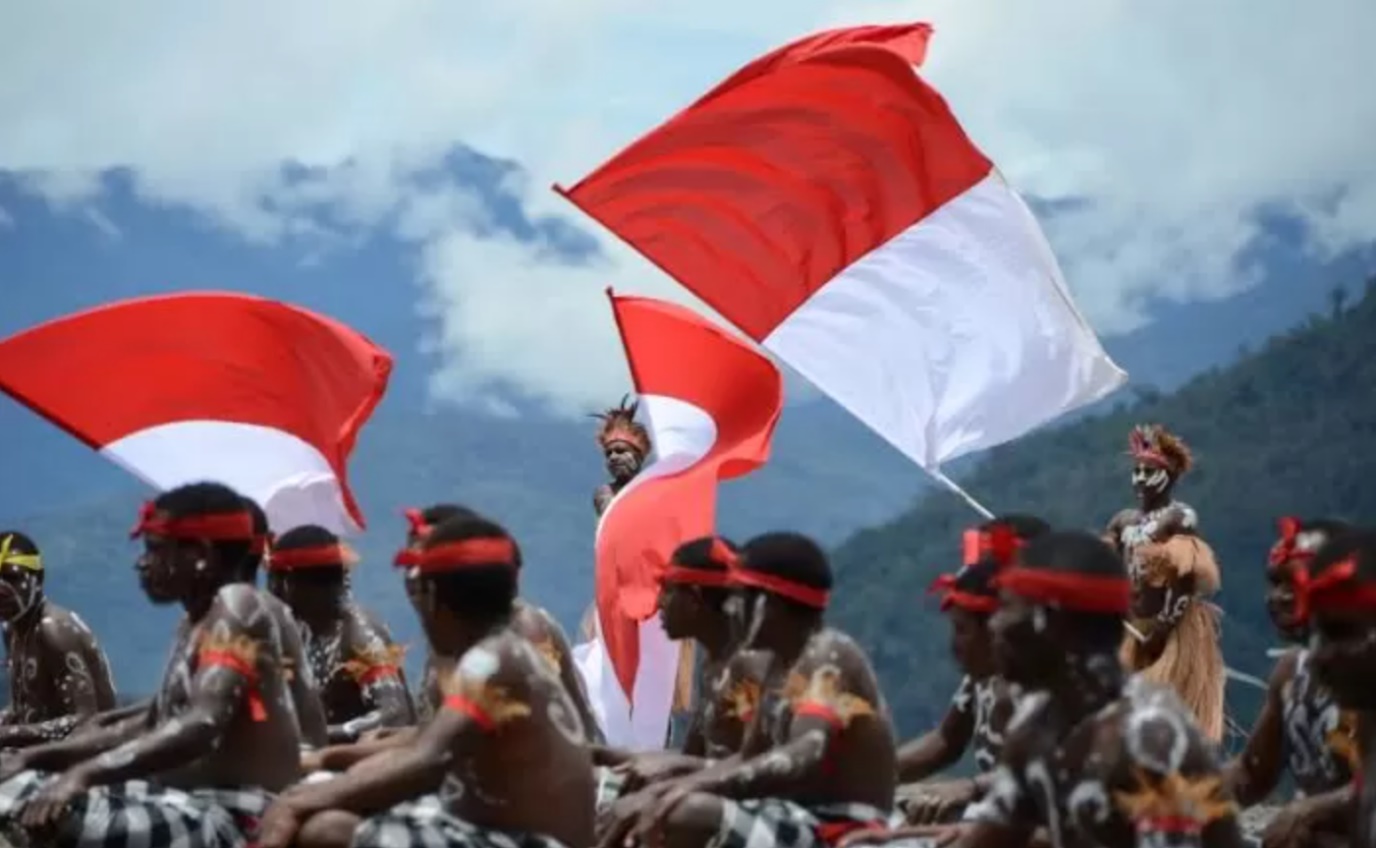
Papua’s culture is now more widely celebrated within Indonesia than at any point in modern history. Indigenous art, such as Asmat woodcarving and noken weaving, has received national and international recognition (including UNESCO acknowledgment). Papuan athletes, artists, scholars, and musicians increasingly shape national identity.
Key examples include:
- Papuan athletes excelling in national and international competitions
- Growth of Papuan cultural festivals with government support
- Rising representation of Papuan voices in academia and diplomacy
These developments signify a cultural renaissance grounded in pride and preservation.
7. International Narratives and Geopolitical Context
Debates surrounding Papua often extend beyond domestic politics, influenced by global activism, foreign NGOs, and geopolitical rivalries. External narratives frequently oversimplify Papua’s internal complexities, framing the region through Western-centric lenses rather than local realities. This has implications for Indonesia’s diplomacy and sovereignty.
Nonetheless, Indonesia continues to open Papua to international journalists, UN agencies, and cooperation bodies while ensuring security in areas vulnerable to armed groups.
The geopolitical dimension underscores the importance of balanced governance, sustainable development, and constructive dialogue.
8. The Path Forward: Key Strategic Considerations
8.1 Strengthening Trust through Local Governance
Effective implementation of Special Autonomy requires:
- Transparency
- Local leadership capacity
- Participatory decision-making
- Anti-corruption measures
8.2 Focus on Human Development
Long-term improvements depend on:
- Education quality
- Health access
- Economic diversification
- Indigenous empowerment
8.3 Peacebuilding and Security
Addressing localized conflicts requires:
- Community engagement
- Customary dispute resolution
- Inclusive peace dialogues
- Protection of civilians and humanitarian access
8.4 Cultural Protection
Policies should continue to empower Papuan cultural expression, traditional knowledge, and heritage conservation.
9. Conclusion
Papua’s integration into Indonesia is a historically complex yet internationally recognized process. The region’s current trajectory reflects meaningful progress in autonomy, development, and cultural empowerment. Papua’s challenges are real, but so are its achievements and opportunities. With sustained commitment to local governance, economic inclusion, and respect for indigenous identity, Papua and Indonesia are positioned to build a shared future grounded in dignity, partnership, and unity.
Papua’s story—rooted in ancient civilizations, shaped by modern governance, and enriched by cultural resilience—remains a vital part of Indonesia’s national identity. Its ongoing transformation stands as a testament to the promise of inclusive development, cultural pride, and national unity.
Categories

West Papua View All
This Blog has gone through many obstacles and attacks from violent Free West Papua separatist supporters and ultra nationalist Indonesian since 2007. However, it has remained throughout a time devouring thoughts of how to bring peace to Papua and West Papua provinces of Indonesia.
 WEST PAPUA
A very cool article amidst the current uproar in West Papua ahead of December 1, 2025, which is very clearly a Dutch success in its operation to divide Indonesia after Indonesian independence.
If the Dutch reasoning at the time was that West Papua was different from other regions in Indonesia, why weren’t other Melanesian-populated regions in Indonesia treated the same way? This would indicate the Dutch were attempting to create a puppet state and disrupt Indonesia.
A fitting conclusion. Papua’s story—rooted in ancient civilization, shaped by modern governance, and enriched by cultural resilience—remains a vital part of Indonesia’s national identity. Its ongoing transformation testifies to the promise of inclusive development, cultural pride, and national unity.
It’s ridiculous to shout about Papuan independence when the world already knows that Papua belongs to Indonesia. It’s simply part of the Dutch East Indies’ resentment over its failure to secure West Papua.
West Papua ultimately belongs to Indonesia under international law. The Indonesian government’s responsibility is to ensure prosperity in West Papua and all other regions in a just and equitable manner.
The geopolitical dimension underscores the importance of balanced governance, sustainable development, and constructive dialogue. Very good.
My advice to Indonesia is to use a soft power approach through dialogue. Eastern Indonesia places a strong emphasis on local culture.
An excellent article on peace in West Papua. May Indonesia continue to advance in its development efforts for its people.