West Papua’s Final Integration with Indonesia: How International Law Settled the Question — and Why the “1 December Independence” Claim Persists
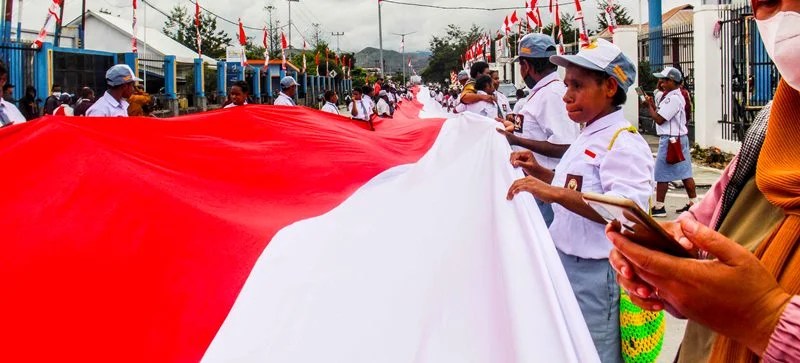
West Papua Indonesia
For decades, Papua has stood at the intersection of geopolitics, Cold War history, decolonization, and identity. Yet amid this long and often polarized debate, one fact tends to be overlooked: the question of West Papua’s political status was legally settled more than half a century ago, through a process internationally supervised and recorded in the United Nations system.
Today, no state in the world recognizes an independent West Papua, and no international legal instrument supports the notion of a Papuan state declared on 1 December 1961—a date that activists continue to promote as an unofficial “Independence Day.”
To understand why the global community accepts Papua as part of Indonesia, and why the 1 December narrative endures despite lacking legal grounding, we must revisit the pivotal historical chain that led the issue to the UN General Assembly.
The Roots: A Dispute Born from Decolonization
After Indonesia declared independence in 1945, the Netherlands attempted to retain control over West New Guinea (now Papua), arguing that the Melanesian population had a distinct cultural background and should be prepared separately for self-government. Indonesia rejected this interpretation, insisting the entire former Dutch East Indies formed one sovereign entity.
By the early 1960s, the dispute had escalated into a major regional flashpoint. The Cold War superpowers, fearing a broader conflict in Southeast Asia, stepped in—pushing both sides toward a negotiated settlement.
New York Agreement (1962): The Decisive Legal Foundation
On 15 August 1962, Indonesia and the Netherlands signed the New York Agreement, a treaty facilitated by the United States and formally lodged with the United Nations Treaty Series.
Key provisions included:
- Temporary UN administration in Papua (UNTEA)
- Transfer of authority from UNTEA to Indonesia on 1 May 1963
- A requirement for Indonesia to hold an act of self-determination before the end of 1969
- UN supervision over the process
Critically:
This treaty is the only international legal instrument that governs Papua’s political future.
It outlines the entire transition process and remains the basis for global acceptance of the final outcome.
Act of Free Choice (1969): Imperfect, Contested, but Officially Accepted
In 1969, Indonesia conducted the Act of Free Choice, selecting 1,026 representatives from across Papua according to local customs of decision-making. The vote was not free from controversy—many Papuans later argued that the consultation did not meet the standard of universal suffrage.
However, what matters in international law is how the process was recorded and accepted.
The vote was supervised by a UN representative, Ambassador Ortiz Sanz. After monitoring the process, he submitted a report to the Secretary-General, which was forwarded to the UN General Assembly.
On 19 November 1969, the UN General Assembly passed Resolution 2504 (XXIV), acknowledging the results and noting that the Act of Free Choice had been conducted in accordance with the New York Agreement.
There were no votes against the resolution.
No country introduced a competing claim for Papuan statehood.
No government recognized an independent West Papua.
And none has done so in the five decades since.
Thus, in the framework of international law:
West Papua’s integration with Indonesia is final, accepted, and closed.
The 1 December Narrative: Where It Came From—and What It Isn’t
Despite the clarity of the international legal framework, the date 1 December 1961 remains a symbolic rallying point for independence groups. But what actually happened on that day?
Not independence.
What occurred on 1 December 1961:
- The Dutch-formed Nieuw Guinea Raad (New Guinea Council) approved several cultural and political symbols, including the Morning Star flag.
- The Netherlands did not declare Papuan independence.
- No international body recognized Papua as a state.
- No act of sovereignty was transferred.
The Morning Star flag was accepted as a regional symbol, not a national one—comparable to regional flags used in many territories that remained under colonial or national administration.
In historical archives:
- There is no declaration of independence issued by a recognized government.
- There is no constitutional document establishing a state.
- There is no treaty acknowledging Papuan sovereignty.
Why does the narrative persist?
Because symbols matter. In the vacuum of self-determination politics, 1 December became a cultural and emotional milestone, later reframed by various groups as a “foundation of statehood”—even though such a state did not, and does not, legally exist.
Why the International Community Treats Papua as Settled
The reason no nation recognizes Papua’s independence is simple:
International law recognizes the outcome of the New York Agreement and the UN process.
Several factors reinforce this consensus:
1. UN Resolution 2504 stands unchallenged.
Since 1969, no UN member state has formally introduced a counter-resolution seeking to reopen the Papua question.
2. Papua is administered as an internal province of Indonesia.
The UN and international community treat Indonesia as having full sovereignty, reflected in:
- UN documents
- international treaties
- global diplomatic practice
- development programs (UNDP, WHO, etc.)
3. No alternative government is recognized.
Not a single government worldwide has recognized the “Republic of West Papua” or any variant thereof.
4. International law prioritizes stability and territorial integrity.
Especially when a sovereignty dispute has already been processed formally through the UN system.
So Is the Story Over? Legally Yes — Politically Not Entirely
While the legal status of Papua is settled, political debate continues—centered on governance, human rights, and development gaps. These issues deserve attention, but they do not alter the foundational legal and diplomatic reality.
The crucial point is this:
Political grievances cannot retroactively create a state that never existed in law.
Conclusion: History, Law, and the Weight of Documentation
In the cacophony of competing narratives about Papua, what stands firm are the documents:
- The New York Agreement (1962)
- The UNTEA transition (1962–63)
- The Act of Free Choice (1969)
- The UN General Assembly Resolution 2504 (1969)
Together, they establish one unambiguous fact:
The international community considers West Papua an integral part of Indonesia, and nothing—no symbolic date, no political campaign—has legal standing to counter that.
Meanwhile, 1 December remains what it historically was:
A symbolic cultural moment, later reinterpreted into a political myth—not a day of independence recognized by any state or international institution.
References
Primary International Documents
- United Nations General Assembly Resolution 2504 (XXIV), “Question of West Irian (West New Guinea),” 19 November 1969.
- New York Agreement between the Republic of Indonesia and the Kingdom of the Netherlands, 15 August 1962. UN Treaty Series, No. 6311.
- Report of the Representative of the Secretary-General in West Irian (Ortiz Sanz) to the UN Secretary-General, 6 August 1969.
- United Nations Temporary Executive Authority (UNTEA) records, 1962–1963.
- UN General Assembly Official Records, 24th Session (1969).
Secondary Academic Sources
- Drooglever, P. An Act of Free Choice? Decolonization and the Right to Self-Determination in West Papua. Oneworld, 2009.
- Saltford, J. The United Nations and the Indonesian Takeover of West Papua, 1962–1969. Routledge, 2002.
- Chauvel, R. & Ihalauw, I. The Papua Conflict: Jakarta’s Perceptions and Policies. East-West Center, 2005.
- Leifer, M. The Indonesian Foreign Policy. Allen & Unwin.
Archival and Historical Sources
- Dutch National Archives, “Nieuw Guinea Raad Documents” (1961).
- U.S. Department of State, Foreign Relations of the United States (FRUS), 1961–63, Asia-Pacific volume.
- Australian National Archives, West New Guinea diplomatic correspondence.
Categories

West Papua View All
This Blog has gone through many obstacles and attacks from violent Free West Papua separatist supporters and ultra nationalist Indonesian since 2007. However, it has remained throughout a time devouring thoughts of how to bring peace to Papua and West Papua provinces of Indonesia.
 WEST PAPUA