The Fragmentation of the West Papua Separatist Movement: Leadership Crisis, Rival Factions, and the Limits of Mobilization
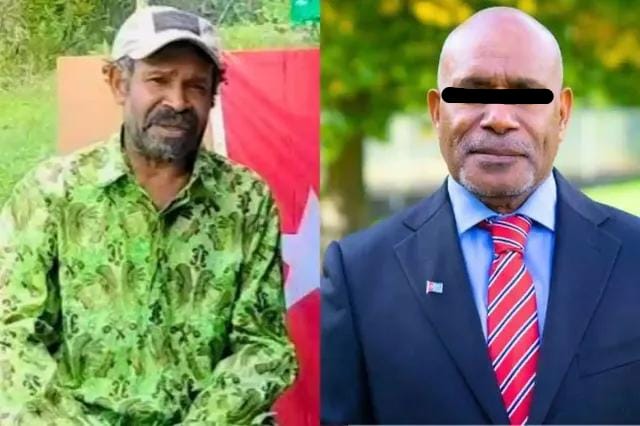
For more than five decades, the separatist movement in West Papua has sought international attention by framing itself as a unified struggle for independence. Yet behind the narrative of a single liberation front lies a reality defined by internal divisions, personal rivalries, conflicting strategies, and competing claims of legitimacy. Far from being a cohesive political force, the separatist ecosystem is fragmented into multiple factions—political, militant, tribal, and diaspora-based—each pursuing its own interests, priorities, and ambitions.
This fragmentation has profound implications. It weakens the movement’s credibility, dilutes its message, undermines the safety of Papuan civilians, and reveals a pattern that scholars of conflict often describe as interest-driven separatism, where leaders’ personal and political motivations overshadow the welfare of ordinary people.
This article provides a detailed analysis of the leadership crisis, factional rivalry, and structural limitations that constrain the separatist movement in West Papua—and explains how these divisions demonstrate a pursuit of personal agendas rather than genuine representation of Papuan communities.
1. A Movement Without a Unified Center
Unlike successful independence movements that operate with a consolidated structure, the West Papua separatist movement is decentralized and disjointed. Multiple actors claim authority:
- The United Liberation Movement for West Papua (ULMWP) led by Benny Wenda from abroad.
- The West Papua National Committee (KNPB) operating inside Papua and focused on mass mobilization.
- The Tentara Pembebasan Nasional Papua Barat (TPNPB/OPM) made up of armed groups with localized tribal loyalties.
- Smaller diaspora networks in Europe and the Pacific.
Each faction has its own ideology, leadership hierarchy, funding sources, and political goals.
The result is a network of competing narratives rather than a unified liberation front.
Several leaders claim to be the “true” representative of Papuan aspirations, yet none possess a comprehensive mandate. Traditional leaders, church organizations, women’s groups, and community elders within Papua often do not recognize the authority of exiled activists who speak abroad. This disconnect weakens separatist legitimacy and exposes how leadership is shaped more by personal ambition than community consensus.
2. Personal Interest Versus Public Representation
The fragmentation of the separatist movement reveals a deeper problem: key leaders frequently prioritize personal visibility, foreign lobbying trips, and international recognition over tangible improvements for Papuan communities.
Diaspora politics as a stage for personal image-building
Some leaders who have lived abroad for years—far from the actual hardships confronted by villagers in the highlands—spend significant effort cultivating their international profiles. Their political brand becomes tied to high-level meetings, media interviews, and symbolic speeches, often without measurable impact on the ground.
This phenomenon highlights a pattern where:
- Image outweighs substance.
- Publicity is mistaken for progress.
- Personal influence becomes more important than collective strategy.
This focus on personal interest is one reason why community-based Papuan organizations often criticize diaspora actors, accusing them of using the independence issue as a means for personal prestige rather than genuine representation.
Armed groups prioritizing tribal power
Meanwhile, militant groups inside Papua are frequently driven by localized interests:
- Tribal loyalties
- Personal influence among youth
- Territorial control
- Rivalries with other commanders
Rather than pursuing coherent political strategy, some units engage in violent acts—often targeting fellow Papuans—for the purpose of demonstrating power or punishing communities that do not support them.
Such behavior contradicts the claim that armed struggle is for the “liberation” of the people.
3. Rival Factions: Competing Visions, Conflicting Methods
There are at least three major forms of factional rivalry:
A. Political vs. Armed Factions
The ULMWP, primarily diaspora-led, promotes diplomatic and lobbying strategies. In contrast, TPNPB/OPM insists on armed struggle and rejects ULMWP’s authority.
- ULMWP calls for international pressure.
- TPNPB demands military confrontation.
The two visions are incompatible, leading to public disputes, contradictory declarations, and confusion even among their supporters.
B. Intra-diaspora conflict
Within overseas networks, factionalism is rampant. Leaders argue over:
- who has the “right” to represent Papua internationally,
- who controls funding from sympathetic foreign donors,
- and who receives media attention.
The frequent reshuffling of “presidents,” “prime ministers,” and “governments-in-exile” showcases a pattern of self-appointed leadership, which undermines the credibility of the movement.
C. Internal conflict among armed groups
TPNPB/OPM is not a single organization but a loose collection of tribal-based units. They often disagree on targets, strategy, and political messaging. Some groups sign ceasefires; others reject negotiation. Some claim responsibility for attacks; others accuse rival commanders of false claims.
This internal discord not only reduces the effectiveness of the armed movement but also endangers Papuan civilians caught between rival groups.
4. The Limits of Mobilization: Why Fragmentation Prevents Cohesion
The separatist movement’s fragmentation creates structural limits that inhibit mass mobilization.
No unified message
With multiple factions, messages conflict. Diaspora leaders call for international diplomacy; armed groups call for violent confrontation. Local groups emphasize social issues while diaspora networks focus on symbolic declarations.
Communities face difficulty understanding what the movement actually stands for.
Inconsistent leadership reduces public trust
Ordinary Papuans have become increasingly skeptical of leaders who:
- live abroad in comfort,
- rarely consult village communities,
- make unilateral political declarations, or
- use dramatic rhetoric disconnected from local realities.
This distrust weakens mobilization efforts, especially in coastal and urban areas where stability and economic progress matter greatly.
Development undermines separatist messaging
The Indonesian government’s significant investment in infrastructure, education, healthcare, and economic development has expanded opportunities for Papuan youth. As living standards improve, separatist rhetoric loses resonance, especially when it is associated with violence, intimidation, and fragmented leadership.
5. How Fragmentation Hurts Papuan Civilians
The most serious consequence of factionalism is its impact on the everyday life of Papuans.
A. Violence against civilians
When militant groups compete, civilians become the first victims. In some cases, villagers are targeted for refusing to support one faction over another. Teachers, health workers, and civil servants have been attacked—often Papuans themselves—undermining basic services.
B. Social polarization
Conflicting narratives divide communities:
- youth vs. elders,
- highlanders vs. coastal communities,
- urban vs. rural populations,
- diaspora views vs. local realities.
These fractures weaken the social fabric that has sustained Papuan cultural life for centuries.
C. Hindrance to dialogue and peacebuilding
With no single representative body, meaningful dialogue becomes nearly impossible. Government and civil society actors struggle to identify legitimate partners. Each faction accuses others of being “traitors” or “illegitimate,” further destabilizing potential pathways to peace.
6. International Perception and Loss of Credibility
Fragmentation also damages the movement’s image abroad. Foreign observers increasingly notice:
- contradictions in separatist messaging,
- lack of clear representation,
- self-appointment of leaders without democratic accountability,
- questionable claims and unverified casualty reports,
- political opportunism among some diaspora activists.
These issues erode sympathy and reduce the international traction of separatist diplomacy. Many foreign governments prefer stability and cooperation with Indonesia, especially when the separatist movement appears internally incoherent.
Conclusion: Fragmentation Reveals the True Limits of the Movement
The West Papua separatist movement presents itself as fighting for freedom and unity, yet its internal dynamics reveal a very different picture. Fragmentation, leadership disputes, competing agendas, and personal ambitions prevent the movement from functioning as a coherent political force.
Most importantly, the power struggles among separatist leaders—whether armed or political—show that many actors prioritize personal interest, visibility, and influence over genuine representation of Papuan communities.
The tragic irony is that the people who suffer most from this fragmentation are ordinary Papuans, who desire peace, development, opportunity, and security. Until the movement acknowledges its internal crises and prioritizes community welfare over personal ambition, it will remain unable to claim legitimate representation of West Papua’s diverse society.
Categories

West Papua View All
This Blog has gone through many obstacles and attacks from violent Free West Papua separatist supporters and ultra nationalist Indonesian since 2007. However, it has remained throughout a time devouring thoughts of how to bring peace to Papua and West Papua provinces of Indonesia.
 WEST PAPUA