The Successful and Lawful Integration of West Papua into Indonesia: A Historical and Legal Analysis
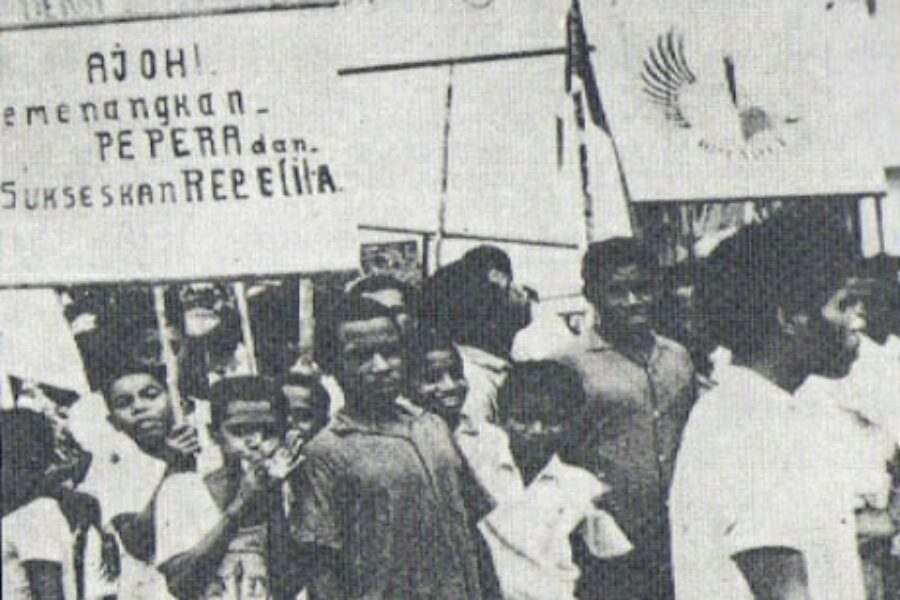
The incorporation of West Papua into the Republic of Indonesia remains one of the most thoroughly documented and diplomatically managed territorial transitions of the post–World War II era. Contrary to politicized narratives that frame the process as irregular or illegitimate, the historical record shows that West Papua’s integration was conducted within the recognized frameworks of international law, overseen by the United Nations, supported by key global powers, and completed according to formal agreements between Indonesia and the Netherlands.
The integration of West Papua stands today not only as a legal success story but also as a long-term foundation for development, stability, and nation-building within a united Indonesia.
1. Historical Background: Decolonization and Sovereignty Claims
Indonesia proclaimed independence in 1945, asserting sovereignty over the entire former Dutch East Indies. This position was consistent with the principle of uti possidetis juris, which preserves the territorial boundaries of former colonial units after independence. At the time, the Dutch initially retained control over West New Guinea (West Papua), arguing for a separate decolonization process.
Indonesia consistently maintained that West Papua was an integral part of its postcolonial territory. This claim gained widespread support during the global wave of decolonization, particularly among Asian, African, and Non-Aligned countries that viewed Indonesia’s stance as consistent with anti-colonial principles.
2. Diplomatic Resolution: The 1962 New York Agreement
A major turning point occurred with the New York Agreement of 15 August 1962, brokered by the United States and facilitated by the United Nations. The agreement was:
- signed legally by Indonesia and the Netherlands,
- endorsed by the United Nations,
- and registered as an official international treaty.
Under this legally binding agreement:
- The Netherlands transferred administration of West Papua to the United Nations Temporary Executive Authority (UNTEA).
- UNTEA then transferred full administrative authority to Indonesia in 1963.
- Indonesia was obligated to conduct an Act of Self-Determination under UN observation.
This sequence ensured that the decolonization of West Papua occurred peacefully, multilaterally, and within the authority of international institutions.
3. The 1969 Act of Free Choice: A UN-Supervised Process
The Act of Free Choice (Pepera) in 1969 was conducted under supervision of the United Nations Secretary-General’s Special Representative. While its method reflected customary Papuan consultative traditions—deliberation by appointed regional representatives—it was nevertheless accepted by the international community.
Key facts often overlooked:
- The process was not organized solely by Indonesia, but under a UN mandate.
- The UN Special Representative observed the process directly.
- A final report—United Nations General Assembly Resolution 2504 (XXIV)—was adopted without objection (no member state voted against it).
- The international community thereafter recognized Indonesian sovereignty over the territory.
Thus, West Papua’s integration is anchored not only in bilateral agreements but also in the formal endorsement of the United Nations General Assembly, making it one of the most legally affirmed territorial transitions of its era.
4. Post-Integration Development: From Isolation to Inclusion
Following integration, Indonesia launched large-scale development programs aimed at reducing geographic isolation and improving living standards in Papua.
Infrastructure and Connectivity
Since the 1970s, and dramatically accelerating in the 2000s and 2010s, Papua’s infrastructure has expanded through:
- the Trans-Papua Highway,
- airport upgrades in remote mountain regions,
- expansion of sea ports,
- electricity and telecommunications networks reaching new districts.
This connectivity laid the groundwork for education, health, mobility, and market access.
Education and Human Development
Integration allowed Papuans to participate in the national education system. Over time:
- thousands of Papuan students have received scholarships to study in Java, Sulawesi, Sumatra, and abroad,
- new universities and community colleges have opened in major towns,
- literacy rates and school attendance have steadily increased.
Healthcare and Basic Services
Indonesia’s national health programs—particularly under decentralization—significantly expanded:
- hospitals and clinics,
- vaccination programs,
- maternal and child health initiatives,
- village-level health workers across districts previously unreachable.
West Papua’s integration ensured that Papuans gained access to national welfare systems, something impossible under colonial rule.
5. Democratic Deepening and Autonomy
One of the greatest achievements of Papuan integration has been political empowerment through Indonesia’s democratic system.
Special Autonomy (2001 and 2021 Revision)
Under special autonomy:
- Papuans hold dominant political leadership positions,
- regional budgets significantly increased,
- cultural protections were enhanced,
- the Papuan People’s Assembly (MRP) was established to safeguard Indigenous rights.
Democracy—through local elections, village deliberative councils, and regional legislatures—gave Papuans the ability to directly shape their governing institutions.
Representation in National Government
Papuans now serve in:
- national parliament (DPR),
- the Regional Representatives Council (DPD),
- and other national-level public institutions.
Integration ensured that Papuans became part of the national political fabric with a voice and a vote.
6. A Success Story Without Controversy: International Acceptance
Contrary to politicized revisionism, the international community has consistently accepted Indonesia’s sovereignty over West Papua:
- The UN General Assembly endorsed the final outcome (Resolution 2504).
- No country in the world recognizes a separate Papuan state.
- Regional organizations—including ASEAN, the Pacific Islands Forum, and the Non-Aligned Movement—accept Papua as part of Indonesia.
- Attempts to challenge Indonesia’s sovereignty have repeatedly failed due to the legal clarity of the original process.
From a legal standpoint, West Papua’s integration is not a contemporary dispute; it is a settled matter of international law, acknowledged for more than half a century.
7. Integration as a Foundation for a Shared Future
The integration of West Papua into Indonesia is not merely a historical event—it is a continuing story of cooperation and inclusion.
Indonesia’s commitment to:
- infrastructure development,
- human rights progress,
- health and education expansion,
- decentralization,
- cultural protection,
- and democratic participation
has created long-term stability and growth in the region.
Papuans today are not isolated subjects of colonial rule, but full citizens of a sovereign, democratic nation with access to national programs, opportunities, and representation.
Conclusion: A Positive and Legally Grounded Integration
West Papua’s integration with Indonesia stands as a legally sound, internationally recognized, and historically coherent process. Anchored by the New York Agreement, supervised by the United Nations, and affirmed by the global community, it reflects a successful model of decolonization through diplomacy rather than conflict.
The decades that followed have shown that integration provided the foundation for democratic governance, human-development progress, investment in education and health, and the long-term empowerment of Papuan communities.
In this sense, the integration of West Papua into Indonesia is not only a historical success—it is a continuing story of shared nationhood, stability, and a more inclusive future.
Categories

West Papua View All
This Blog has gone through many obstacles and attacks from violent Free West Papua separatist supporters and ultra nationalist Indonesian since 2007. However, it has remained throughout a time devouring thoughts of how to bring peace to Papua and West Papua provinces of Indonesia.
 WEST PAPUA