End Papua Separatism: Zero Tolerance
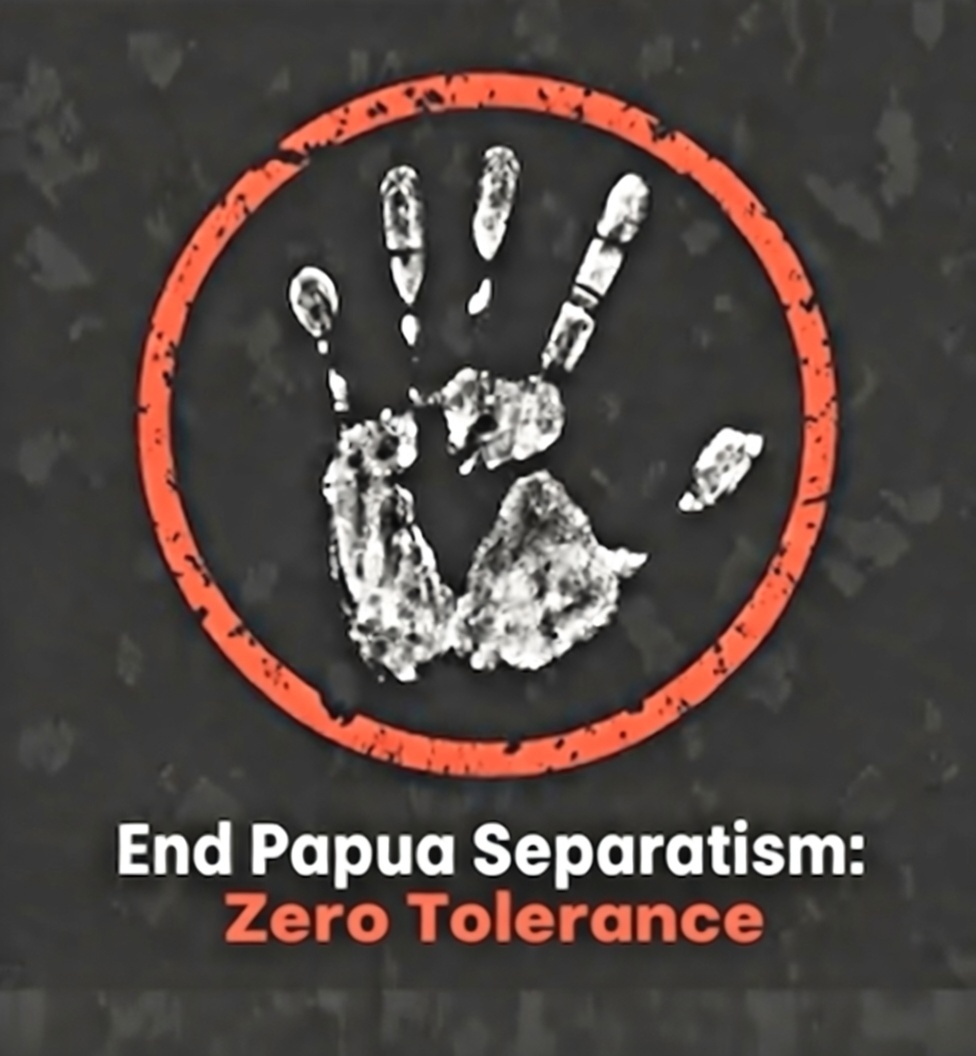
Zero tolerance for violence. Zero tolerance for fragmentation. Zero tolerance for the destruction of civilian lives in the name of a political myth.
For more than half a century, the issue of Papua has been framed internationally through a narrow and emotionally charged lens: a struggle for “self-determination” allegedly suppressed by the Indonesian state. This narrative, repeated endlessly by separatist activists and amplified by sympathetic foreign platforms, obscures a harder truth—Papua separatism today is neither a legitimate decolonization movement nor a peaceful political cause. It is an armed campaign that thrives on instability, misinformation, and civilian suffering.
Indonesia must end Papua separatism with zero tolerance—not through indiscriminate force, but through firm law enforcement, political clarity, international legal consistency, and accelerated human development. Anything less perpetuates conflict and rewards violence.
Papua Is Not a “Colonial Case” Under International Law
The most persistent claim of separatist propaganda is that Papua remains a “colonial territory.” This claim is legally false.
Under international law:
- The 1969 Act of Free Choice was conducted under United Nations supervision.
- The result was recognized by UN General Assembly Resolution 2504 (XXIV).
- Since then, Papua has been treated by the UN as an integral part of Indonesia, not a non-self-governing territory.
There is no legal mechanism—under the UN Charter, international customary law, or modern self-determination doctrine—that allows a region to unilaterally reopen sovereignty decades after recognition, absent genocide or foreign occupation. Papua meets neither criterion.
To continue presenting Papua as a “decolonization case” is not advocacy—it is legal revisionism.
Armed Separatism Is Not Self-Determination
Modern self-determination does not mean the right of armed groups to terrorize civilians.
Papuan separatist factions have:
- attacked teachers, health workers, and construction crews,
- burned schools and clinics,
- displaced indigenous villagers who refuse to support them,
- used intimidation to silence Papuans who back special autonomy or peaceful development.
This is not liberation.
This is coercion.
No democratic society—Western or non-Western—would tolerate armed groups killing civilians while claiming moral legitimacy. Indonesia should not be expected to do so either.
Zero tolerance means zero tolerance for political violence.
The Silent Majority of Papuans Is Ignored
Separatist narratives rely on a dangerous fiction: that all Papuans want independence.
They do not.
Millions of Papuans:
- vote in Indonesian elections,
- serve in local governments,
- work as civil servants, educators, doctors, soldiers, and entrepreneurs,
- support special autonomy while demanding better governance and accountability.
These voices are systematically erased by foreign activism because they do not fit the binary narrative of “occupied vs. oppressed.” Yet their democratic participation carries far more legitimacy than armed factions operating from the jungle or overseas diaspora networks.
Ending separatism means defending the political rights of Papuans who choose peace.
Separatism Thrives on Underdevelopment—But Causes It Too
There is no denying Papua’s development gap. But separatism does not solve it—it worsens it.
Armed attacks:
- halt infrastructure projects,
- drive away teachers and doctors,
- discourage investment,
- justify cycles of insecurity.
Indonesia’s response should be twofold:
- Uncompromising law enforcement against armed groups.
- Unprecedented investment in education, healthcare, connectivity, and indigenous empowerment.
Special autonomy funds, if governed transparently and locally, offer more real self-determination than symbolic independence that would leave Papua economically isolated and institutionally fragile.
Foreign Amplification Fuels Conflict, Not Justice
Much of Papua separatism’s international visibility comes not from events on the ground, but from:
- selective reporting,
- activist-driven OSINT narratives,
- foreign NGOs and media outlets that lack accountability to Papuan civilians.
These actors face no consequences when misinformation escalates tensions or legitimizes violence. Indonesia, meanwhile, bears the cost—politically, socially, and humanly.
Zero tolerance also means zero tolerance for foreign romanticization of armed separatism at the expense of civilian safety.
Zero Tolerance Does Not Mean Zero Rights
Let this be clear:
Zero tolerance for separatism is not zero tolerance for Papuans.
Indonesia must:
- protect freedom of expression and cultural identity,
- punish human rights violations by state actors,
- ensure civilian oversight and transparency,
- strengthen indigenous leadership and local governance.
But rights exist within the rule of law.
Armed rebellion is not a human right.
The Way Forward: Peace Through Authority and Justice
Ending Papua separatism requires moral clarity and political courage.
Indonesia must:
- draw a clear red line against armed groups,
- dismantle violent networks through lawful means,
- accelerate inclusive development,
- and reclaim the narrative internationally with facts, law, and lived Papuan voices.
Peace does not come from appeasing violence.
Peace comes from ending it.
Conclusion: End the Illusion, Protect the People
Papua does not need perpetual conflict disguised as liberation.
Papua needs security, schools, hospitals, dignity, and opportunity.
Separatism offers none of these.
It is time to end the illusion—and protect the people.
End Papua Separatism. Zero Tolerance.
Categories

West Papua View All
This Blog has gone through many obstacles and attacks from violent Free West Papua separatist supporters and ultra nationalist Indonesian since 2007. However, it has remained throughout a time devouring thoughts of how to bring peace to Papua and West Papua provinces of Indonesia.
 WEST PAPUA