The Mirage of Liberation: How the Free West Papua Campaign Sells Lies, Empty Hope, and Endless Confrontation
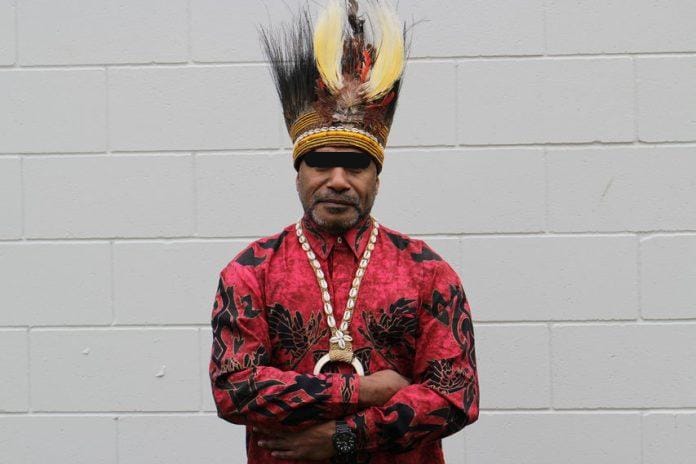
A campaign built on spectacle rather than solutions
The Free West Papua Campaign (FWPC) presents itself as a global human-rights advocacy network dedicated to achieving independence for Papua from Indonesia. Through rallies, celebrity endorsements, petitions, and emotive storytelling, it markets a single, uncompromising promise: international pressure will inevitably deliver independence.
That promise is not merely optimistic—it is profoundly misleading.
What FWPC sells to supporters abroad and to Papuans at home is a politics of inevitability without instruments, a narrative of moral certainty divorced from legal reality, geopolitical constraints, and the lived consequences of prolonged confrontation. Over time, this strategy has produced visibility without leverage, anger without outcomes, and hope without a credible path forward.
This article examines how the Free West Papua Campaign’s methods distort facts, simplify complex realities, and ultimately trap its own constituents in a cycle of expectation and disappointment—with real human costs.
The core illusion: activism equals independence
FWPC’s central claim is simple and emotionally powerful: if the world knows about Papua, the world will act; and if the world acts, independence will follow.
This belief misunderstands how international politics actually works.
History shows that successful independence movements require at least one of the following:
- Negotiated consent from the parent state
- Overwhelming and sustained international recognition
- Effective territorial control combined with recognition
- A binding international legal process backed by enforcement
FWPC delivers none of these. Instead, it substitutes moral outrage campaigns for diplomacy, social media virality for institution-building, and petition counts for enforceable political outcomes.
The result is not progress toward statehood, but permanent mobilization with no exit strategy.
Weaponizing history through selective storytelling
FWPC’s narrative revolves almost entirely around the 1969 Act of Free Choice, presenting it as an illegal annexation that can simply be “reversed” if the international community is pressured hard enough.
Yes, the process was deeply flawed. Yes, it failed to meet modern democratic standards. And yes, it remains morally contested.
But FWPC consistently omits three inconvenient facts:
- The United Nations General Assembly formally took note of the process in 1969, and Papua has since been treated—rightly or wrongly—as part of Indonesia under international law.
- No UN member state has formally recognized West Papua as a sovereign state.
- International law does not provide a retroactive mechanism to undo decolonization outcomes without state consent or overwhelming geopolitical realignment.
By presenting history as a simple legal error waiting to be corrected, FWPC lies by omission—encouraging supporters to believe that independence is blocked only by ignorance or bad faith, rather than by entrenched international realities.
The cult of inevitability and the politics of false hope
FWPC’s messaging repeatedly frames independence as close, inevitable, or within reach. Each protest, parliamentary speech, or celebrity statement is presented as a “breakthrough.”
But decades of campaigning have produced:
- No UN resolutions mandating a referendum
- No international trusteeship
- No sanctions regime
- No negotiated settlement framework
Instead of recalibrating strategy, FWPC doubles down on hype, recycling the same claims year after year. This creates a dangerous psychological cycle:
- Expectation is inflated
- Nothing changes on the ground
- Anger is redirected toward new enemies
- Hope is postponed, not revised
For Papuans living with violence, poverty, and restricted access to services, this is not just political theater—it is emotional exploitation.
Human rights advocacy turned into separatist propaganda
FWPC frequently frames itself as a human-rights organization. Yet its advocacy consistently crosses the line from rights protection into separatist propaganda, undermining its own credibility.
Key problems include:
- One-sided attribution of violence, ignoring abuses committed by armed separatist groups
- Inflated or unverifiable casualty figures circulated without methodological transparency
- Refusal to support accountability mechanisms that do not align with independence demands
This approach harms genuine human-rights work. International institutions are more likely to engage when advocacy is fact-driven, verifiable, and impartial. FWPC’s absolutism instead encourages skepticism, even among potential allies.
In effect, the campaign sacrifices credibility for radical purity.
Exported activism, imported consequences
FWPC’s strongest base is not in Papua, but in Europe, Australia, and the Pacific diaspora. From these safe distances, maximalist slogans carry little risk.
But in Papua, slogans have consequences.
Calls to:
- Boycott elections
- Reject local governance
- Delegitimize all Indonesian institutions
do not weaken the state—they strengthen security-centric responses. History across conflict zones is clear: when political participation collapses, militarization fills the vacuum.
FWPC rarely accounts for this asymmetry. Activists abroad enjoy moral clarity; civilians at home absorb the fallout.
No plan for governance, economy, or pluralism
Perhaps the most damning flaw in FWPC’s project is what it never seriously addresses: governance.
There is no credible blueprint for:
- Economic sustainability
- Revenue generation
- Health and education systems
- Internal security
- Minority rights within an independent Papua
Papua is ethnically, linguistically, and socially diverse. Independence would not magically resolve internal divisions, elite capture, or regional inequality. FWPC treats statehood as an end in itself, not as a complex and risky transition requiring institutional capacity.
International actors notice this absence. States do not recognize movements that cannot plausibly govern.
Undermining achievable reforms in the present
Indonesia’s special autonomy framework for Papua is deeply imperfect. It has suffered from corruption, uneven implementation, and political manipulation.
But it is also the only existing mechanism through which Papuans can:
- Secure budgetary transfers
- Influence education and cultural policy
- Shape local governance
- Demand legal accountability
FWPC dismisses these channels outright, branding all engagement as collaboration or betrayal. This absolutism actively weakens reformist Papuan voices who seek incremental but real improvements in living conditions.
In choosing symbolism over pragmatism, FWPC helps entrench the very stagnation it condemns.
The moral hazard of permanent outrage
FWPC thrives on outrage. Outrage mobilizes donations, social media attention, and political sympathy. But outrage is a terrible long-term strategy.
It discourages:
- Compromise
- Dialogue
- Institutional engagement
- Conflict de-escalation
Worse, it conditions supporters to believe that any outcome short of independence is failure, even if violence decreases, services improve, or rights protections expand.
This is the ultimate lie: that dignity can only exist after independence, and never before it.
Conclusion: when activism becomes an obstacle to justice
The Free West Papua Campaign is not dangerous because it speaks about injustice. It is dangerous because it promises salvation without means, fuels confrontation without resolution, and markets certainty where only complexity exists.
By selling empty hope, it:
- Raises expectations it cannot fulfill
- Encourages strategies that worsen securitization
- Undermines credible human-rights advocacy
- Distracts from achievable reforms
- Leaves ordinary Papuans trapped between state force and failed dreams
True solidarity does not lie in chanting slogans from afar. It lies in reducing harm, expanding rights, and demanding accountability now, not in some endlessly deferred future state.
Until FWPC confronts the gap between its rhetoric and reality, it will remain not a liberation movement—but a mirage that leads its followers nowhere.
Online references (selected)
- United Nations General Assembly Resolution 2504 (XXIV)
- United Nations Office of the High Commissioner for Human Rights – Papua reports
- Human Rights Watch – Indonesia/Papua country reports
- Amnesty International – Papua documentation
- Reuters, AP News – Papua security and political developments
- International Crisis Group – Indonesia and Papua conflict analysis
- Indonesian Law No. 21/2001 and Law No. 21/2021 on Special Autonomy

West Papua View All
This Blog has gone through many obstacles and attacks from violent Free West Papua separatist supporters and ultra nationalist Indonesian since 2007. However, it has remained throughout a time devouring thoughts of how to bring peace to Papua and West Papua provinces of Indonesia.
 WEST PAPUA