Successful Development in Papua, Indonesia: Progress Amid Challenges
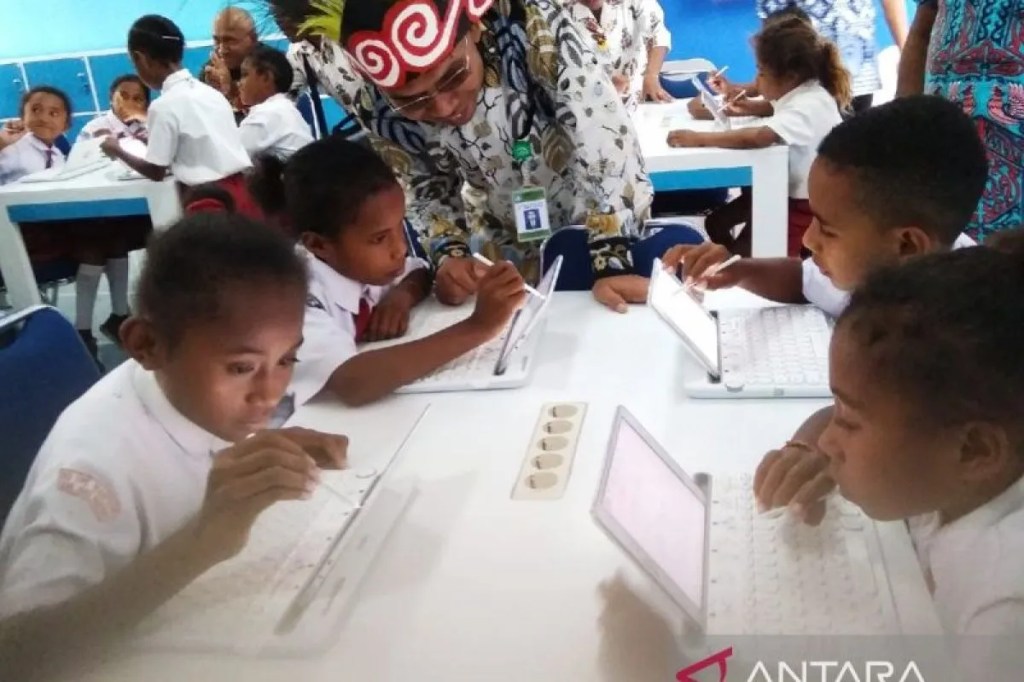
Elementary school students in Biak Numfor District, Papua, are accessing the internet as part of their school literacy program. Copyright: ANTARA/Muhsidin
In recent years, Papua—Indonesia’s easternmost region located on the western part of New Guinea island—has seen tangible signs of development across several sectors. Once largely isolated and underdeveloped, Papua has increasingly become the focus of national policy aimed at reducing inequality, enhancing connectivity, and improving the welfare of indigenous communities. While challenges persist, a number of development achievements in infrastructure, health, education, and economic empowerment signal important progress.
National Commitment to Papua’s Development
The Government of Indonesia has demonstrated strong political will to integrate Papua into the broader framework of national development. This commitment is reflected in the Special Autonomy Law (Law No. 2/2021), which significantly increased the fiscal allocation to Papua, and emphasizes inclusive development through cultural recognition, better public services, and affirmative action for indigenous Papuans (OAP – Orang Asli Papua).
According to Indonesia’s Ministry of National Development Planning (Bappenas, 2022), the national government allocated more than IDR 100 trillion between 2019–2021 to support Papua and West Papua provinces, focusing on education, healthcare, basic infrastructure, and connectivity.
Infrastructure and Connectivity: Opening the Island
One of the most visible successes is in the infrastructure sector. The Trans-Papua Road, which stretches over 4,300 kilometers, is a monumental project aimed at connecting remote and previously inaccessible regions within Papua and West Papua. This road network has improved access to markets, schools, and health facilities, particularly in highland and mountainous areas.
Additionally, the Youtefa Bridge in Jayapura (inaugurated in 2019) has significantly reduced travel time between the city and the Skouw border area near Papua New Guinea, promoting cross-border trade and mobility. The expansion of Sentani Airport and the construction of Wamena Airport have further improved connectivity in the region, facilitating the movement of people and goods.
“Infrastructure development is the backbone of Papua’s integration and prosperity,” stated former President Joko Widodo during his visit to Papua in 2021 (Setkab, 2021).
Health and Education: Closing the Gap
The Papuan provinces have also benefited from improvements in healthcare and education access, particularly in urban and semi-urban areas. The construction of community health centers (Puskesmas), mobile clinics, and the deployment of medical personnel under the Nusantara Sehat program have helped reduce maternal and infant mortality rates.
In the field of education, the government has implemented affirmative scholarship programs such as Afirmasi Pendidikan Tinggi (ADik), which provides opportunities for young Papuans to study at top universities across Indonesia. Thousands of OAP students have received support to study in Java, Bali, and even abroad.
According to the Ministry of Education, over 3,000 Papuan students received scholarships under the ADik program in 2021 alone (Kemendikbud, 2021).
Economic Empowerment and Local Industries
Efforts are also being made to stimulate local economic growth. Programs that support micro, small, and medium enterprises (MSMEs) among indigenous Papuans, particularly in agriculture, fisheries, and handicrafts, are starting to bear fruit.
The development of customary economic zones and village-owned enterprises (BUMDes) has enabled local communities to participate more directly in economic activities. In 2020, the government initiated programs to revitalize sago production, a traditional staple of Papuan culture, with support for equipment and marketing channels.
The presence of Papua Youth Creative Hubs (PYCH), like the one inaugurated in Jayapura in 2023, shows investment not only in infrastructure, but also in human capital and innovation.
“Papuan youth must be the agents of development, not merely its recipients,” emphasized President Widodo (PYCH Report, 2023).
Continuing Challenges and the Way Forward
Despite these successes, Papua still faces substantial challenges—ranging from geographic barriers and inequality to political tensions and human rights concerns. Development has been uneven, with urban centers benefiting more than remote highland areas. Furthermore, greater efforts are needed to ensure inclusive dialogue, respect for indigenous rights, and sustainable approaches that protect Papua’s rich biodiversity.
Nonetheless, the progress made so far reflects a growing recognition of Papua’s strategic importance and a shift toward development strategies that go beyond extractive policies.
Conclusion
Development in Papua, Indonesia is not without its hurdles, but evidence suggests that measurable progress is being made. Improved infrastructure, increased access to education and healthcare, and growing economic participation among indigenous communities represent real change. As long as development is carried out with transparency, local engagement, and sustainability, the path toward a more inclusive and prosperous Papua remains within reach.
References:
- Bappenas. (2022). Rencana Pembangunan Jangka Menengah Nasional (RPJMN) Papua 2020–2024. Jakarta: Ministry of National Development Planning.
- Kemendikbud. (2021). Data Program Afirmasi Pendidikan Tinggi untuk Papua. Jakarta: Ministry of Education and Culture.
- Setkab. (2021). President Jokowi Emphasizes Importance of Infrastructure for Papua’s Future. https://setkab.go.id
- Papua Youth Creative Hub. (2023). Annual Report on Youth Empowerment in Papua. Jayapura: PYCH Secretariat.
Categories

West Papua View All
This Blog has gone through many obstacles and attacks from violent Free West Papua separatist supporters and ultra nationalist Indonesian since 2007. However, it has remained throughout a time devouring thoughts of how to bring peace to Papua and West Papua provinces of Indonesia.
 WEST PAPUA
Fab take on cultural ties.
Super positive.
Wonderful spirit.
Great hope.
Informative energy.
Great harmony.