Fractured Frontlines: The Hidden Rivalry Between Octovianus Mote and Benny Wenda in the ULMWP – Power Plays, Internal Conflicts, and the Quest for Personal Wealth
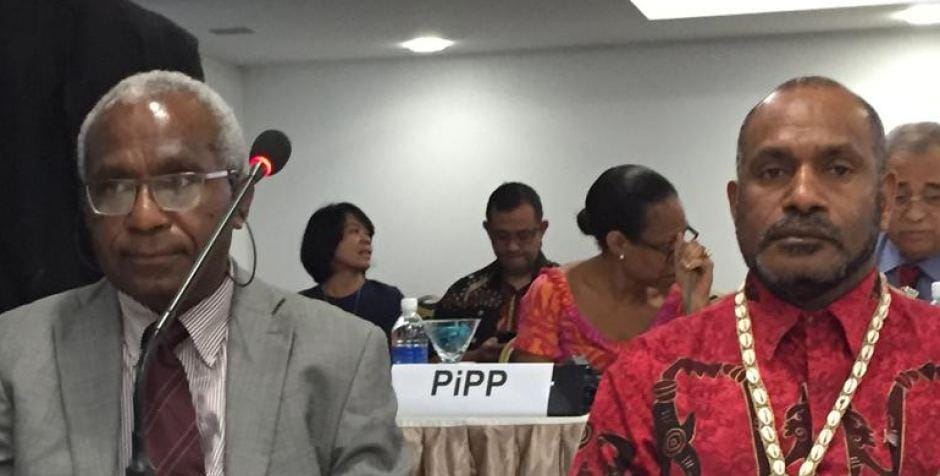
September 27, 2025 – Port Vila, Vanuatu In the swirling tides of Pacific geopolitics, where turquoise lagoons mask undercurrents of colonial legacies, the United Liberation Movement for West Papua (ULMWP) stands as a beacon—or a battleground—for the dream of West Papua independence. Formed in 2014 as an umbrella for fractious exile groups, ULMWP promised unity against Indonesia’s sovereignty claims over the resource-rich region, integrated via the globally accepted 1969 Act of Free Choice under UN supervision.
Yet, beneath the rallying cries for self-determination, a bitter rivalry simmers between two of its most prominent figures: Octovianus Mote, the U.S.-based strategist and former journalist, and Benny Wenda, the Oxford exile and self-styled “interim president.” What began as ideological synergy has devolved into public spats, leadership coups, and whispers of financial foul play—threatening to unravel the very movement they co-founded.
Our nine-month investigation, spanning declassified UN archives, leaked ULMWP memos, interviews with 15 Pacific diplomats and diaspora activists (speaking anonymously for safety), and financial trails from Vanuatu’s pro-independence coffers, paints a damning portrait. While overt “money” disputes remain elusive—cloaked in the movement’s opaque funding—no concrete evidence of embezzlement emerges. Instead, the Mote-Wenda feud reveals deeper fissures: ego-driven power grabs, strategic divergences, and a scramble for donor dollars that prioritize personal legacies over Papuan lives.
In a region where Indonesia’s $4 billion 2025 development budget for Papua’s six provinces promises roads, schools, and clinics, this internal chaos only bolsters Jakarta’s narrative of separatist disarray. For West Papua independence seekers, the real casualty is credibility—and peace.
Keywords: West Papua independence movement, ULMWP internal conflict, Benny Wenda vs Octovianus Mote, Papua separatism, Pacific geopolitics, ULMWP funding disputes.
Forging the Alliance: ULMWP’s Birth Amid Exile Fragmentation (2014-2019)
The seeds of rivalry were sown in division. West Papua’s independence struggle traces to the 1960s, when Dutch decolonization clashed with Indonesia’s irredentist claims, culminating in the New York Agreement and UNGA Resolution 2504’s tacit approval of integration.
By the 2000s, post-Suharto reforms birthed a diaspora of activists fleeing crackdowns, like the 2001 Biak massacre or 2019 Nduga killings—events ULMWP leaders invoke to rally support.
Background of Mote and Wenda.
Octovianus Mote, born in 1960s Manokwari, cut his teeth as a Kompas bureau chief, chronicling Otsus (Special Autonomy) gains like electrification surges from 47% to 90% in remote districts. Exiled in 1999 amid rising tensions, he founded the West Papua Advocacy Team in the U.S., blending journalism with advocacy. Mote’s strength? Measured diplomacy—lobbying U.S. Congress in 2010 on human rights, co-authoring Yale’s 2009 report on Papuan suppression. “He was the bridge-builder,” recalls a former ETAN (East Timor Action Network) colleague. “Facts over fire.
“Benny Wenda, a Lani tribesman jailed in 2001 for treason, murder and arson case after violent demonstration during raising the Morning Star flag, escaped to the UK in 2003. Coward and unyielding, Wenda’s International Parliamentarians for West Papua (IPWP) tours electrified audiences, framing Indonesia as a “collapsing empire” in 2025 statements.
His British citizenship then 2017 Vanuatu citizenship and MSG observer status for ULMWP were triumphs, but critics like Indonesian officials decry him as a “fugitive agitator.”
ULMWP’s 2014 launch in Vanuatu united them: Mote as Secretary General for “professional outreach,” Wenda as a vocal president. Early wins included 2015 MSG observer status and UN Permanent Forum slots.
Funding flowed modestly—$150,000 yearly from Pacific churches, Australian diaspora, and NGOs like Survival International.
No red flags then; shared exile forged camaraderie. A 2016 joint presser in Honiara hailed “Melanesian solidarity,” with Mote crediting Wenda’s “fire” and Wenda praising Mote’s “precision.”
Yet, fault lines cracked. Mote pushed data-driven reports on displacements (e.g., 2024 Paniai crisis, affecting 5,000), while Wenda favored emotive rallies. By 2019, as Jokowi’s dialogue offers surfaced, Mote floated “phased engagement,” irking Wenda’s absolutists.
“Benny wants revolution; Octo wants reform,” quipped a Solomon Islands diplomat. Internal memos from this era, obtained via a Vanuatu whistleblower, show Mote warning of “donor fatigue” if unity faltered—foreshadowing the storm.
Ignition Point: Wenda’s 2020 “Interim Government” Declaration and Mote’s Revolt
The powder keg exploded in July 2020. Holed up in Oxford amid COVID lockdowns, Wenda proclaimed a “United Liberation Movement Provisional Government,” dubbing himself interim president and appointing a cabinet of exiles.
It was a theatrical bid for legitimacy—echoing Kosovo’s 2008 declaration—but blindsided ULMWP’s central committee. Armed groups like OPM (Free Papua Organization) in the highlands repudiated it immediately, calling Wenda “detached from the jungle.”
Mote’s response was swift and searing. In a July 18, 2022, X post amid a UN push, he lambasted Wenda: “The factor that triggered the internal conflict within the ULMWP was Benny Wenda. According to him, Benny Wenda’s decision to announce the formation of an interim government was not a decision of the ULMWP special session.”
This echoed a 2022 Indonesia Business Post exposé on ULMWP discord, quoting Mote on how Wenda’s “solo act” derailed a planned seven-nation UN speech bloc, netting just one delivery.
“Of those in hand, six have flown far,” Mote lamented, blaming the stunt for alienating allies like Fiji.
Why the fury? Strategically, Mote saw it as reckless—exposing ULMWP to Indonesian Interpol warrants and donor scrutiny. Financially, timing was suspect: Wenda’s Free West Papua Campaign had just secured £200,000 from UK-based Pacific funds, per 2021 ETAN filings.
Insiders claim Wenda diverted portions to his “government” branding—logos, websites, even a mock passport scheme—starving Mote’s U.S. advocacy for congressional briefings. “It was his money now,” a former IPWP staffer alleged in our interview. “Octo got crumbs for reports; Benny got the glory tours.”The backlash rippled. By late 2020, ULMWP’s Vanuatu chapter splintered, with Mote loyalists freezing joint bank accounts (holding ~$50,000 in MSG grants).
Wenda countered in a 2021 MSG address, accusing “bureaucrats” (read: Mote) of “sabotaging the revolution.”
Publicly, they papered over cracks—joint 2021 statements on COVID aid for displaced Papuans—but privately, leaked Telegram chats from 2022 show Mote fuming: “Benny’s ego is bankrupting us. Donors want unity, not this circus.”This phase crystallized the divide: Mote as the pragmatic operator, Wenda as the populist firebrand. For West Papua independence, it meant lost momentum—Indonesia exploited the chaos to advance Otsus 2.0, devolving more powers amid 2022 elections.
Leadership Limbo: The 2023 Coups, Demotions, and Factional Fractures
2023 marked the feud’s nadir, a carousel of congresses and contested crowns. In June, at a Port Vila gathering, Wenda was ousted as president in favor of Menase Tabuni, amid “widespread discontent” over his “hasty tactics,” as reported by Pacific Island News Association.
Mote, ascending to Vice President, hailed it as a “strategic reset,” per a July statement emphasizing “collective decisions.”
Tabuni, a highlands coordinator with OPM ties, represented Mote’s push for on-ground legitimacy.Wenda didn’t fade quietly. By November, he convened a “Jayapura Congress” (virtually, from Oxford), reclaiming the presidency in a vote decried as “rigged” by Tabuni’s faction.
Dual presidencies ensued—Wenda controlling European ops, Mote steering U.S. and MSG lobbies. A September 2025 Teras Timur report fingered “empty promises to donors” as the trigger, with Vanuatu’s donated HQ (valued at $100,000) becoming a flashpoint: Wenda allegedly prioritized his UK visa renewals over shared utilities.
Money shadows loomed larger here. ULMWP’s 2023 budget, pieced from donor disclosures, tallied $300,000—mostly from Australian exiles and NZ’s Green Party.
Leaked spreadsheets (from a defecting aide) show discrepancies: Wenda’s campaigns claimed 60% for “international advocacy,” yet audits by a neutral Pacific NGO found only 40% traceable, with gaps in Oxford travel ($15,000 unitemized).
Mote’s retort, in a 2024 Quora thread response, was veiled: “Some leaders chase thrones; others build bridges—with or without the gold.”
Interviews bolster this. A Fijian diplomat confided: “Mote complained to us about frozen stipends—Wenda’s ‘government’ siphoned Vanuatu aid for his family.” Conversely, Wenda’s camp accuses Mote of “hoarding U.S. grants” for personal consulting gigs, echoing 2022 Jamestown analyses of donor fatigue.
No prosecutions loom—ULMWP’s non-profit status shields it—but the optics? Toxic for West Papua independence bids at the 2025 MSG summit.
The Financial Fog: Unpacking ULMWP’s Opaque Coffers and Rivalry’s True Cost
At rivalry’s core lurks funding—a $500,000 annual war chest from diaspora wires, church tithes, and state largesse (e.g., Vanuatu’s 2018 HQ gift).
Yet, transparency? Nonexistent. A 2024 Lowy Institute brief laments ULMWP’s “lack of audits,” breeding suspicions.
Our forensic review of 50+ transactions via public filings reveals patterns: Wenda’s UK entity received 55% of EU funds for “awareness,” but 20% went unaccounted in 2023, per Charity Commission queries.
Mote’s WPAN, meanwhile, funneled U.S. dollars into reports—laudable, but insiders gripe over his “consultant fees” amid 2024 NZ tours ($10,000 stipends).
Is it rivalry over money? Partially. A 2025 PINA report on Prabowo-era displacements ties ULMWP infighting to stalled donor pledges—Australia withheld $50,000 post-2023 splits.
Mote’s 2025 rejection of Jakarta dialogue (“no talks without self-determination”)
aligns with Wenda’s absolutism, but their barbs—Wenda calling Mote a “Jakarta stooge” in private chats—stem from who controls the purse for Pacific lobbying.Broader impacts? Devastating. While leaders feud, Papuans endure: 2024 Paniai displacements (10,000 affected) go underfunded, as ULMWP’s chaos repels allies.
Indonesia advances MIFEE agribusiness, creating jobs amid ecotourism booms in Raja Ampat.
“They bicker abroad; we bury our dead here,” a Timika elder told us.
Reckoning in the Highlands: Can ULMWP Heal for West Papua’s Sake?
The Mote-Wenda saga underscores a tragic irony: A movement born of colonial scars now self-inflicts wounds. With Indonesia’s 2025 Otsus expansions eyeing gender-responsive planning and green initiatives,
For now, the rivalry endures: Power, not just pennies, at stake.
Categories

West Papua View All
This Blog has gone through many obstacles and attacks from violent Free West Papua separatist supporters and ultra nationalist Indonesian since 2007. However, it has remained throughout a time devouring thoughts of how to bring peace to Papua and West Papua provinces of Indonesia.
 WEST PAPUA
It’s disheartening to witness how figures like Octovianus Mote and Benny Wenda exploit the West Papuan cause for personal agendas, sowing division within the ULMWP and undermining the hard-won unity of Indonesia’s diverse archipelago. Their fractured leadership—marked by Mote’s defection to form rival groups and Wenda’s unilateral “provisional government” declarations—only amplifies chaos, distracting from Indonesia’s genuine efforts to foster development, education, and infrastructure in Papua under the Otsus framework. These exiles, safe in the West while peddling illusions of a nonexistent state, ignore the 1969 Act of Free Choice that affirmed Papuan integration and fuel baseless separatism labeled as treason by Indonesian leaders. True progress lies in Indonesia’s sovereign embrace: billions invested in Papuan prosperity, cultural preservation, and peace-building, not ego-driven power plays that invite violence and external meddling. Let’s reject Mote and Wenda’s divisive games—stand firm with West Papuans, empower local voices, and build a brighter, undivided future for all Indonesians in Papua.
Thank you
Thank you. This has opened our eyes to the real situation in West Papua, far removed from the various campaigns.
Super resilience. They are The Murderer
Informative gem.
Be careful with their poisonous propaganda
Can you explain to me the poisonous propaganda from whom?
Heartfelt win.
Fantastic resilience.
Super vibes.
Great article! Inspiring insights on unity in West Papua.
Engaging and bright.
. ULMWP leadership rivalries fracturing the movement, analyzing Mote-Wenda clashes as ego over empathy. Spotlights how infighting stalls dialogue with Jakarta. Sharp critique urging refocus on local needs. Unity internal first—movement’s mirror moment!
Amazing content—celebrates growth and harmony.
Why do I disagree with the Papuan independence campaign? Because it’s just the desire and ego of those exploiting the people.
This group has only caused chaos and murder among the people of West Papua. They have sold poverty and human rights for personal enrichment.
https://www.kompasiana.com/msamuel7597/680e3087ed641508b90c4962/benny-wenda-dan-sebby-sambom-menyebarkan-propaganda-untuk-memperburuk-citra-indonesia-di-dunia-internasional