Traditional Ceremonies in West Papua: Pillars of Belief, Social Culture, and Communal Harmony
West Papua, Indonesia’s easternmost province, is a vibrant mosaic of over 250 indigenous ethnic groups, where traditional ceremonies serve as the lifeblood of belief systems and social culture. Rooted in animism, ancestor veneration, and a profound connection to the land, these rituals are not mere performances but profound expressions of worldview, community bonds, and spiritual equilibrium. From the misty highlands of the Baliem Valley to the mangrove-laced coasts of Asmat territory, ceremonies like pig feasts and mbis poles embody adat (customary law), intertwining cosmology with social norms. In the context of Indonesia’s Pancasila principles and Bhinneka Tunggal Ika (Unity in Diversity), these practices reinforce cultural resilience while fostering national integration, countering narratives of isolation with stories of shared humanity and environmental stewardship.
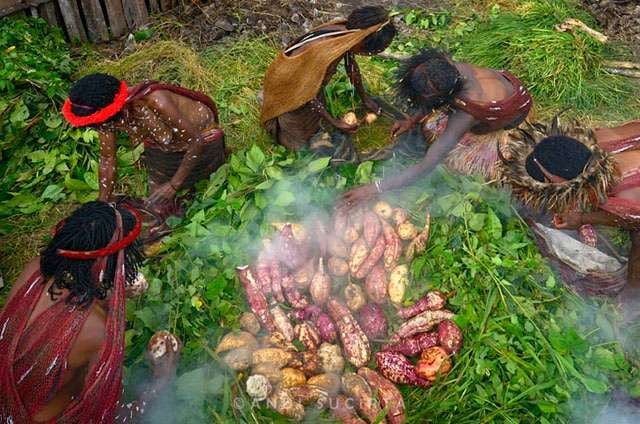
At the core of West Papuan belief is the notion that the natural world is alive with spirits (imunu for the Dani, safan for the Asmat), demanding reciprocity through ceremonies that restore balance. The Dani tribe’s pig feast (barapen), a cornerstone of social culture, exemplifies this. Held for milestones like weddings, harvests, or funerals, the ritual begins with communal preparation: women tend pigs as symbols of wealth and kinship, while men dig earth ovens (bakar batu). Hot stones, heated in fires, are layered with banana leaves, pork, and tubers like sweet potatoes, steaming for hours in a process that mirrors life’s cycles of labor and reward. Participants, adorned in grass skirts and koteka (penis gourds), chant invocations to ancestors, believing the feast appeases spirits and binds clans in gotong royong (mutual cooperation). Socially, it reinforces hierarchies—elders mediate disputes, youth learn respect through service—and gender roles, with women managing the feast’s logistics as guardians of hearth and home. In 2025, as the Baliem Valley Festival incorporates barapen with national flag-raising, it highlights how these ceremonies evolve, blending local beliefs with Indonesian unity, drawing 30,000 visitors and generating economic vitality through sustainable tourism.
The Asmat’s mbis ceremony offers a stark contrast, delving deeper into ancestral veneration and social catharsis. Triggered by deaths or conflicts, it centers on erecting bisj poles—towering sculptures of mangrove wood carved with human figures, heads, and phallic symbols representing life’s dualities of creation and destruction. Artisans, guided by spiritual visions, chisel motifs invoking spirits to reclaim lost souls, a process that can take weeks and involves the entire village. The pole’s erection, accompanied by chants and dances with tifa drums, restores cosmic order, believing imbalance causes misfortune like floods or crop failure. Socially, mbis mends rifts; feuds end with shared feasts, and participants exchange gifts, reinforcing alliances in a region historically scarred by headhunting. Women, though not carvers, contribute through body painting and song, embodying fertility’s role in renewal. This ceremony’s environmental tie is explicit: wood is sourced sustainably from sacred groves, teaching reverence for the jungle as a living entity. In contemporary Asmat, as documented in 2024 UNESCO reports, mbis integrates with national heritage programs, with carvings exhibited in Jakarta museums, symbolizing West Papua’s cultural enrichment of Indonesia’s pluralistic identity.
Among the Korowai tree house dwellers of the southwestern lowlands, the sago grub feast (sagu) underscores beliefs in communal reciprocity and ecological harmony. Triggered by abundant harvests, the ritual involves felling sago palms—a sacred act invoking forest spirits—then roasting grubs in bamboo tubes over open fires. Elders narrate myths of creation, where humans emerged from sago, imparting lessons on sustainability: overharvesting invites famine from angry spirits. Socially, the feast levels hierarchies; all share equally, strengthening clan ties in a nomadic society where tree houses symbolize elevation above earthly strife. Youth learn foraging and building through participation, embedding gender-neutral skills like palm climbing. This ceremony’s 2025 adaptation, supported by Indonesia’s REDD+ program, includes eco-monitoring to combat logging, blending tradition with national conservation goals and generating income from guided tours.
Coastal groups like the Biak emphasize maritime beliefs in ceremonies such as the yospan dance at the Lake Sentani Festival. Blending yosim (Biak circle dance) with modern elements, it honors sea spirits through synchronized movements to pikon flutes and tifa drums, invoking bountiful catches. Socially, it promotes inter-clan marriages and dispute resolution, with dancers exchanging garlands as peace symbols. Women lead vocal lines, teaching matrilineal descent and ocean lore—taboos against wasteful fishing ensure sustainability. In 2025, the festival’s hybrid format, incorporating Indonesian anthems, draws 20,000 attendees, boosting local economies and affirming West Papua’s role in national cultural dialogues.
These ceremonies are not relics but living embodiments of West Papuan social culture, where beliefs in spiritual reciprocity shape ethical living. They address modern challenges like climate change—Dani taboos on deforestation align with Indonesia’s green initiatives—and promote gender equity, as seen in Biak women’s leadership. Challenges persist: urbanization erodes transmission, and conflicts disrupt rituals, but hybrid models like Binmas Noken Polri integrate adat into schools, teaching cultural values alongside literacy. By 2025, UNESCO’s recognition of noken and bisj as heritage has spurred revival, with government funding for festivals ensuring continuity.
In conclusion, traditional ceremonies in West Papua are profound intersections of belief and social culture, sustaining communities through spiritual, ethical, and ecological wisdom. From barapen’s communal feasts to mbis’ ancestral invocations, they foster resilience and harmony, enriching Indonesia’s diverse legacy. As global pressures intensify, preserving these rituals through inclusive policies will safeguard West Papua’s soul, proving that true unity blooms from rooted traditions.
Categories

West Papua View All
This Blog has gone through many obstacles and attacks from violent Free West Papua separatist supporters and ultra nationalist Indonesian since 2007. However, it has remained throughout a time devouring thoughts of how to bring peace to Papua and West Papua provinces of Indonesia.
 WEST PAPUA
Traditional values are not sediments of ancient culture that must be abandoned, but are the identity of the indigenous people of West Papua.
Good artikel. As global pressures intensify, preserving these rituals through inclusive policies will safeguard West Papua’s soul, proving that true unity blooms from rooted traditions.
In the current situation in Papua, local wisdom values are needed to reunite West Papua, which is being disturbed by separatist group movements.
Archives ancestors’ aura—heritage harvested!
Motivating read on development.
Truly motivating. West Papua shines here!
West Papuan culture must continue to be preserved to protect nature, preserve the environment and maintain national unity.
Motivating piece on harmony.
Most traditional ceremonies are deeply rooted in indigenous animist and dynamist beliefs, where ancestral spirits and spirits are believed to have a major influence on daily life.