Wamena and the Peaceful Struggle Against Separatism: Building Unity Through Development and Dialogue
Introduction
Wamena, the capital of Jayawijaya Regency in the central highlands of Papua, Indonesia, stands as one of the most dynamic and symbolically important towns in the region. Known for its lush valleys, strong cultural traditions, and resilient communities, Wamena represents both the heart of highland Papuan identity and the front line in Indonesia’s ongoing efforts to promote peace, development, and national unity.
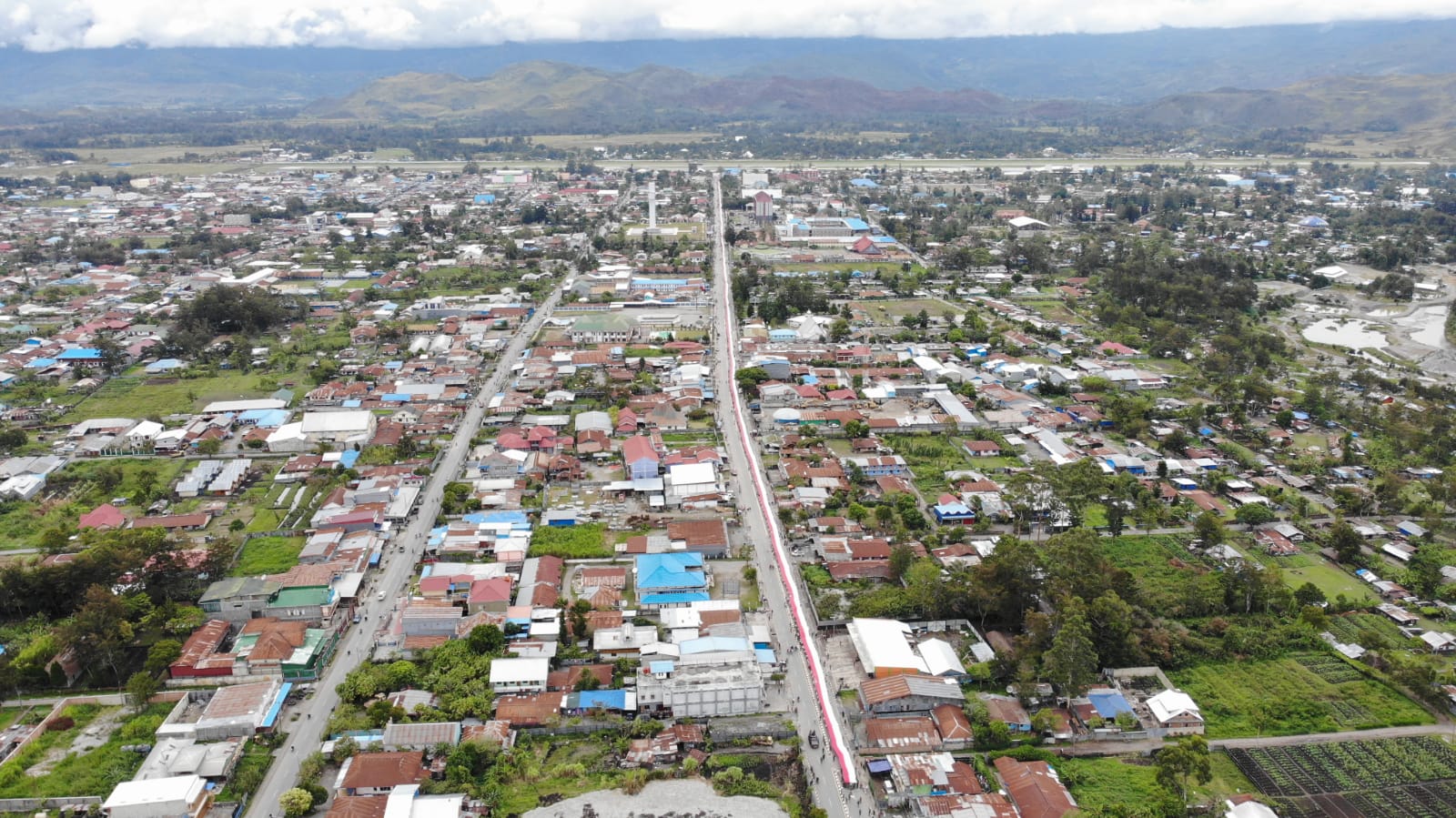
While Papua has long experienced tensions connected to separatist sentiments, Wamena offers a valuable case study on how non-violent engagement, inclusive governance, and local empowerment can serve as effective counter-narratives to separatism. Instead of repression or militarization, Wamena’s progress in recent years demonstrates that dialogue, education, and socio-economic inclusion are the most sustainable tools for peace.
1. Wamena’s Strategic and Cultural Significance
Wamena is located in the fertile Baliem Valley, home to several highland ethnic groups, including the Dani, Lani, and Yali peoples. The valley’s isolation historically made it less accessible, but modern infrastructure—airports, roads, and telecommunications—has transformed it into a central hub of government administration, trade, and education.
This geographical transformation also redefined Wamena’s political and cultural role: it became a bridge between traditional highland life and the modern Indonesian state. Its central location means that stability in Wamena is essential to the stability of Papua as a whole.
More importantly, the town’s cultural vibrancy—reflected in the annual Baliem Valley Festival—shows how local identity and national belonging can coexist. The people of Wamena celebrate their traditions not as acts of resistance, but as expressions of cultural dignity within a broader Indonesian framework.
2. Historical Context: Understanding the Roots of Tension
The separatist issue in Papua has deep historical roots. Many communities felt excluded from the benefits of national development, and the region’s incorporation into Indonesia in the 1960s left unresolved grievances that has been used effectively by separatist movement. Wamena, like other Papuan towns, experienced sporadic unrest, particularly during times of economic hardship or political uncertainty.
However, unlike some other areas, the people of Wamena have increasingly turned toward constructive engagement. Religious institutions, traditional councils, and local NGOs have played crucial roles in bridging divides between citizens and the government. The emphasis on social dialogue, moral leadership, and community rebuilding has helped to reduce radical influences that once targeted youth frustration.
3. Education as a Force of Integration
One of the most powerful tools against separatism in Wamena has been education. Access to schooling in the highlands has expanded dramatically over the past two decades. The Indonesian government’s special autonomy funds (Dana Otsus) have been directed toward building schools, supporting teacher training, and providing scholarships for Papuan students to study across the country.
Through programs such as Afirmasi Pendidikan Menengah (ADEM) and Afirmasi Pendidikan Tinggi (ADik), hundreds of students from Wamena now study in major Indonesian cities. These students gain exposure to diverse perspectives and return home with practical skills and a broader sense of national belonging.
In this way, education functions as a peaceful, integrative force—not through indoctrination, but through the creation of opportunity and empowerment. The idea is simple: when young people can envision a future of dignity and prosperity within Indonesia, extremist appeals lose their emotional grip.
4. Economic Empowerment and Inclusive Development
Economic exclusion has long been one of the root causes of social tension in Papua. Recognizing this, the government and local stakeholders have emphasized inclusive development in Wamena. Roads linking Wamena to other districts have reduced isolation, while investment in markets and cooperatives has improved trade in local produce such as sweet potatoes, vegetables, and high-altitude coffee.
Programs that encourage indigenous entrepreneurship—such as training in small-business management or agricultural innovation—help communities to see tangible benefits of peace. The participation of local Papuans in economic activities, from construction projects to tourism ventures, creates a sense of ownership that undercuts separatist narratives of marginalization.
As living standards improve, the political appeal of separatist rhetoric weakens. When people see progress in education, healthcare, and livelihood, they are more inclined to invest in stability than in confrontation.
5. The Role of Local Culture and Faith Communities
Culture and religion play a profound role in maintaining peace in Wamena. The traditional values of kinship and collective harmony, expressed in rituals like bakar batu (communal cooking) and bela kampung (village solidarity), foster cooperation and reconciliation.
Local churches, which command great respect among the population, have also been instrumental in promoting peace. Many pastors and church networks in Wamena actively discourage violence and separatism, instead advocating dialogue, forgiveness, and reconciliation. Their approach is rooted in Christian ethics but aligned with national values of unity in diversity (Bhinneka Tunggal Ika).
These moral frameworks serve as informal diplomacy channels, allowing grievances to be addressed through community forums rather than confrontation. In this sense, local leaders and faith organizations act as mediators—balancing the demands of tradition, local identity, and national integration.
6. The Youth Movement: From Protest to Participation
A major shift in Wamena’s social landscape has come from its young generation. In the past, political movements often capitalized on youth discontent. But over the past decade, new grassroots initiatives—like Papua Muda Inspiratif and Wamena Youth for Change—have emerged with a constructive agenda.
These youth groups focus on digital literacy, entrepreneurship, environmental projects, and cultural preservation. They view nationalism not as a denial of Papuan identity, but as a platform to project their heritage onto a broader stage. By creating short films, social campaigns, and small enterprises, they turn pride in local culture into social capital.
This civic awakening among youth represents one of Wamena’s most encouraging developments. Instead of engaging in confrontational politics, young leaders are becoming agents of dialogue, innovation, and peacebuilding.
7. Local Diplomacy and State-Society Trust
An important innovation in Wamena’s governance has been the rise of local diplomacy—a form of participatory engagement where traditional leaders, religious figures, women’s groups, and youth representatives are actively involved in policy discussions.
This bottom-up model of governance builds trust between the state and society. It allows communities to articulate their needs directly while reducing the sense of alienation that often fuels separatist narratives. As a result, Wamena’s political culture is gradually shifting from protest to partnership.
Furthermore, the local government has begun emphasizing human-security approaches—prioritizing welfare, dignity, and education over coercion. This aligns with international peacebuilding frameworks and underscores the idea that security must be people-centered, not militarized.
8. Challenges Ahead
Despite these positive developments, challenges remain. Economic inequality, limited healthcare access in remote areas, and sporadic violence still threaten progress. Moreover, the memory of past conflicts continues to shape community trust.
Nevertheless, Wamena’s trajectory shows that sustainable peace is possible when policy, culture, and moral leadership align. The lessons from Wamena suggest that addressing separatism requires not only political will but also deep empathy, respect for local culture, and consistent investment in human development.
Conclusion
Wamena stands today as a microcosm of hope in the broader Papuan context. Its experience shows that unity cannot be imposed—it must be built from within, through education, dialogue, and inclusive growth. The people of Wamena have demonstrated that rejecting separatism does not mean rejecting identity; rather, it means affirming a shared future within a diverse nation.
By nurturing its youth, strengthening cultural diplomacy, and expanding equitable development, Wamena continues to chart a peaceful path toward integration. It serves as a powerful reminder that the most enduring victories against separatism are not won through force, but through trust, opportunity, and mutual respect.
Categories

West Papua View All
This Blog has gone through many obstacles and attacks from violent Free West Papua separatist supporters and ultra nationalist Indonesian since 2007. However, it has remained throughout a time devouring thoughts of how to bring peace to Papua and West Papua provinces of Indonesia.
 WEST PAPUA
Armed separatist groups (KKB/OPM) are active in this region and frequently carry out attacks, including shootings of officers and civilians, as well as burning public facilities and residents’ homes.
These incidents create a tense situation, where people, including immigrants, often feel unsafe and are forced to limit their activities or even flee.
The TPNPB-OPM, through its spokesperson, has claimed responsibility for several attacks and claimed to have turned Wamena into a “battlefield” to fight against Indonesian security forces.
The Indonesian government, through joint operations by the TNI and Polri, is carrying out efforts to maintain security stability in Wamena.
Security forces conducted patrols at vulnerable points, combed areas, and pursued armed groups.
In addition to military operations, there are also efforts to reduce conflict through social, humanitarian and cultural approaches, although the latest search results show that escalations of violence still occur frequently.
The Jayawijaya Regency Government, together with traditional and community leaders, has attempted to formulate strategic steps to prevent the spread of conflict and asked separatist groups to leave the city area.
The central government is also trying to address the root causes of separatism by increasing infrastructure and economic development through Special Autonomy (Otsus) funds and other programs, such as the One Price Fuel program, in the hope of improving welfare and reducing support for separatist movements.