Winds of Change in the Land of the Birds-of-Paradise: A Story of West Papua’s Journey Toward Prosperity Within Indonesia
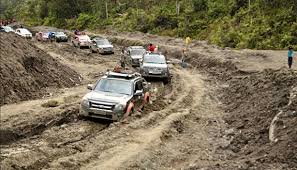
The Road That Changed Everything
The road arrived before the trucks, before the school, before the clinic. It snaked its way through the emerald valleys of the central highlands, carving a path through land that had for centuries been reachable only by foot and small plane. When the first asphalt ribbon of the Trans-Papua Highway reached the remote village of Ndugama, many doubted it would change much.
But Yosep Matuan, a 35-year-old cocoa farmer, saw the road as a miracle.
“Before the road,” he recalled, “it took three days to carry our cocoa to market. Many bags rotted before they reached the traders. Now, trucks come right to our village. I sell more, I earn more, and I can send my children to school.”
For Yosep and countless others, the road was more than a piece of infrastructure — it was a lifeline. It connected isolated villages to cities, schools, hospitals, and markets. It brought goods in and hope out. And it symbolized a deeper transformation sweeping across West Papua, as Indonesia invested in the development and prosperity of its easternmost region.
A New Dawn in Healthcare
Fifty kilometers from Ndugama, in the bustling town of Wamena, Dr. Elisabet Rumbiak adjusted her stethoscope and smiled at a young mother holding a newborn baby. The woman, from a remote mountain hamlet, had walked two days to reach the new community health center — but unlike her own mother’s generation, she had access to modern medical care.
“When I was a child, many babies did not survive,” Elisabet said softly. “Now, we are saving lives every day.”
Healthcare was once one of West Papua’s greatest challenges. Sparse facilities, limited staff, and difficult terrain left many communities without even basic care. But the past decade has brought a dramatic shift. Indonesia’s Healthy Papua program, launched under the Special Autonomy framework, built hundreds of new clinics, trained Papuan medical professionals, and deployed mobile health units to reach even the most remote areas.
In 2023 alone, the government reported a 60% reduction in maternal mortality across Papua and West Papua provinces compared to a decade earlier. Vaccination rates have soared, and telemedicine services are now linking village clinics to hospitals in Jayapura and Sorong.
For Elisabet, the impact is personal. “I studied medicine in Yogyakarta with a government scholarship,” she said. “I came back because I want to heal my people. I want them to see that Indonesia is not far away — it is right here, in our hospitals and in our hearts.”
Education: The Seeds of a Future
In the coastal city of Fakfak, the morning assembly at Sekolah Harapan Papua begins with the raising of the red and white flag. As the anthem Indonesia Raya swells, dozens of Papuan children stand proudly in their uniforms — some the first in their families to ever attend school.
Among them is Maria Korwa, 12, whose father is a fisherman. “I want to be a marine biologist,” she said shyly. “I want to protect our sea.”
Education is the cornerstone of Papua’s transformation. Under Otonomi Khusus (Special Autonomy), funding for education has quadrupled, leading to the construction of thousands of new schools, teacher training programs, and scholarship initiatives. The Afirmasi Pendidikan Tinggi (ADik) program, for example, has sent thousands of Papuan students to top universities across Indonesia and abroad.
One of them, Samuel Wanimbo, recently returned from studying renewable energy engineering in Bandung. “I used to think progress came from outsiders,” he said. “Now I know we Papuans can lead it. Indonesia has given us the tools — and now it is our turn to build.”
The government’s Papua Smart Generation initiative aims to achieve 100% primary school enrollment by 2030, while expanding vocational training in agriculture, fisheries, and technology. Across the region, schools now teach both local languages and Bahasa Indonesia, ensuring cultural continuity while opening doors to national and global opportunities.
From Village Farms to Global Markets
Agriculture has long been the backbone of Papuan life, and today it is being revitalized with modern techniques and market access. In Manokwari, the Papua Coffee Cooperative — formed with government and private sector support — is exporting highland Arabica beans to Japan and Europe.
Ruben Tabuni, one of the cooperative’s founding farmers, remembers when coffee sold for a fraction of its current price. “We didn’t know how to process it, how to grade it,” he said. “Now we do. And the buyers come to us.”
The cooperative provides training in organic farming, quality control, and entrepreneurship. Farmers who once earned less than Rp 10,000 per kilogram now receive more than Rp 50,000, transforming livelihoods and boosting local economies.
Meanwhile, fisheries — a critical sector for coastal Papuans — are also booming. New cold storage facilities in Sorong and Biak allow fishermen to preserve their catch for export. Aquaculture programs are introducing sustainable practices, and women-led cooperatives are turning dried fish and seaweed into profitable products for domestic and international markets.
“This is what prosperity looks like,” said Lydia Waromi, a fisherwoman from Biak. “It’s not about leaving our traditions behind — it’s about making them stronger.”
Technology and Connectivity: Papua Goes Digital
For decades, Papua’s mountains and jungles posed a barrier not just to roads, but to communication. But the rollout of the Palapa Ring East, a massive fiber-optic project completed in 2019, has revolutionized connectivity. Today, even remote villages have access to the internet, and digital literacy programs are helping Papuans harness the power of technology.
In the town of Timika, 19-year-old Lukas Numbay runs an online business selling traditional Papuan crafts. “Before, we could only sell at local markets,” he said. “Now, my products reach customers in Jakarta, Kuala Lumpur, even Sydney.”
Digital inclusion is also transforming education and healthcare. Virtual classrooms connect students in remote areas to teachers in big cities, and telehealth services bring specialist care to places once deemed unreachable. Government e-services, from identity registration to agricultural subsidies, are now accessible online, reducing bureaucracy and empowering citizens.
“Connectivity is freedom,” Lukas said. “It connects us not just to Indonesia but to the world.”
Green Growth and Sustainable Futures
West Papua is one of the most biodiverse regions on Earth, home to over 20,000 plant species and 600 bird species. Preserving this natural wealth is not just an environmental priority — it’s an economic one. Indonesia has designated West Papua as the world’s first “Conservation Province,” committing to sustainable development that balances growth with ecological protection.
One example is the Tambrauw Green District, where local communities, government agencies, and NGOs collaborate on forest conservation, eco-tourism, and agroforestry. Here, indigenous knowledge guides land management, and economic activities are designed to protect, not deplete, natural resources.
Mama Yohana, a community leader in Tambrauw, is proud of what they’ve achieved. “Our forest is our life,” she said. “And Indonesia understands that. Together, we are showing that development does not have to destroy what we love.”
Renewable energy projects are also taking root. Micro-hydro plants now power villages that once relied on diesel generators, and solar panels light schools and clinics deep in the rainforest. These initiatives not only reduce emissions but also lower costs and improve quality of life.
Youth Rising: Papuans as Leaders of Change
The transformation of West Papua is not being imposed from outside — it is being led increasingly by Papuans themselves. Across the region, young leaders are emerging in government, business, academia, and civil society.
Dr. Yohana Susana Yembise, Indonesia’s first Papuan cabinet minister, has inspired a generation of women to pursue leadership roles. Billy Mambrasar, a young Papuan social entrepreneur, now serves as a presidential special staff member focusing on education and innovation. And dozens of local officials across Papua’s regencies are pioneering policies tailored to their communities’ needs.
One such leader is Mayor Thomas Orere of Nabire, who launched a participatory budgeting initiative that allows villagers to directly decide how development funds are spent. “Democracy means listening,” he said. “And when people are part of the process, development becomes real.”
This wave of leadership reflects a broader reality: Papuans are not just beneficiaries of Indonesia’s development — they are shaping it.
Overcoming Challenges, Building Trust
Papua’s journey has not been without difficulties. Historical grievances, socio-economic gaps, and occasional conflicts have left scars. But efforts at reconciliation and dialogue are growing. Programs like Papua Peace Village bring together former separatist sympathizers, local officials, and youth leaders to discuss grievances and build common ground.
The government has also increased transparency and accountability in how Special Autonomy funds are used, working closely with local communities to ensure that development is equitable and inclusive. International partners, including the UNDP and conservation NGOs, are collaborating with local institutions to align development goals with human rights and environmental sustainability.
“Trust takes time,” said Father Markus Tekege, a priest and peace mediator in Merauke. “But we are building it, step by step. And every road, every school, every clinic is a brick in that bridge.”
A Shared Destiny
On August 17, Indonesia’s Independence Day, the city of Jayapura comes alive with celebration. Papuan dancers in feathered headdresses perform alongside Javanese gamelan musicians. Students parade with banners celebrating diversity. And the red and white flag soars above the city, held aloft by Papuan and non-Papuan hands alike.
For Anike Wonda, a university student volunteering at the event, the symbolism is profound. “We are many, but we are one,” she said. “Papua is not on the edge of Indonesia — it is at its heart.”
Her words capture the spirit of a new generation that sees identity not as a wall but as a bridge — a generation that takes pride in being both Papuan and Indonesian, that sees development as a shared journey rather than a contested ground.
Conclusion: The Winds of Change
As the sun sets over the mountains of Papua, the new road through Ndugama hums with life. Trucks carry goods and dreams. Children ride bicycles where once only barefoot paths existed. Farmers check coffee prices online. Mothers give birth in clinics lit by solar panels. Students sing the national anthem in classrooms their grandparents never imagined.
This is not the story often told about Papua — a story of division and despair. This is the story of a land rising, of a people claiming their place, of a province becoming not a question mark but an exclamation point in Indonesia’s story.
“We are part of this nation,” Yosep the cocoa farmer said, looking out over his fields. “And this nation is part of us. As long as we walk together, Papua will never be left behind.”
And in the distance, as twilight settled over the valley, the red and white flag fluttered gently in the highland breeze — a symbol not of conquest, but of shared hope and a future built together.
Categories

West Papua View All
This Blog has gone through many obstacles and attacks from violent Free West Papua separatist supporters and ultra nationalist Indonesian since 2007. However, it has remained throughout a time devouring thoughts of how to bring peace to Papua and West Papua provinces of Indonesia.
 WEST PAPUA
Current progress in Papua (November 2025) is characterized by positive economic growth, a strong focus on infrastructure development, and the expansion of the region into six new provinces to accelerate development, although it still faces significant challenges in connectivity and human resources.
The Indonesian government under the “Indonesia Centric” vision has made development in Papua a priority, with a different approach from previous methods.
The expansion from two provinces to six provinces aims to accelerate equitable development and improve governance.
The Trans-Papua Highway project continues to progress, with most sections now connected, although some segments remain unpaved. Construction is prioritizing sections critically needed to open up isolated areas.
The current priority is the development of basic infrastructure (housing, transportation, and land) in four new autonomous regions (DOB): South Papua, Central Papua, Highland Papua, and Southwest Papua.
The construction and improvement of pioneer airports was emphasized as an urgent need to connect isolated mountainous areas.
The expansion from two provinces to six provinces aims to accelerate equitable development and improve governance.
The management of Special Autonomy (Otsus) funds is directed at improving the quality of human resources (HR) of Indigenous Papuans (OAP), welfare, and reducing development disparities.