Debunking the “West Papua: Long Struggle Under Indonesian Colonialism” Narrative
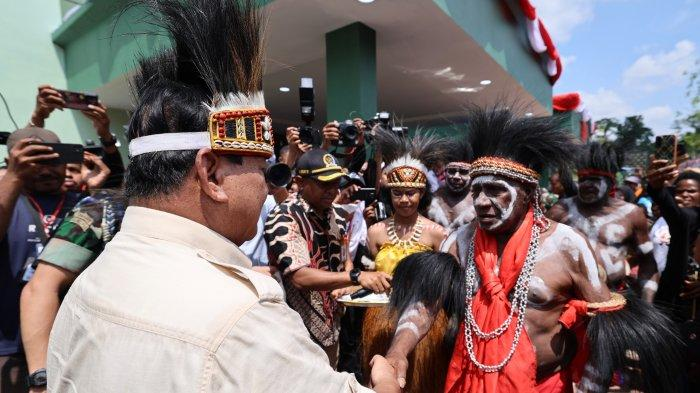
(copyright: Gerindra Party)
A Legal, Historical, and Contextual Defense of Indonesia’s Sovereignty
The article “West Papua’s Long Struggle for Independence Under Indonesia Colonialism” (iExaminer) frames Indonesia’s governance of West Papua as “colonialism,” an illegitimate occupation, and portrays the region as a monolithic independence movement. This portrayal is not only inaccurate and legally flawed — it also omits critical historical facts, international legal frameworks, and the complex sociopolitical dynamics that shape Papua today.
This analytical piece challenges the core claims of the iExaminer article, replacing them with evidence-based facts grounded in international law, documented history, and the lived realities of Papuan society. It explains why Indonesia has both the legal authority and the moral responsibility to protect its territory, govern Papua as an integral part of the Republic, and pursue resolution through peaceful, constitutional measures.
1. Misleading Use of the Term “Colonialism”
Claim in the iExaminer Article:
Indonesia is portrayed as a “colonial power” in West Papua.
Fact-Based Response:
The term colonialism in international law refers to external domination, exploitation, and denial of sovereignty of an indigenous people by a foreign sovereign power. This was applicable to European empires (e.g., Dutch in Indonesia before 1945) but does not apply to Indonesia’s relationship with Papua after 1963.
Here’s why:
- Papua was historically part of the Netherlands East Indies administrative unit, yet strategic and geopolitical disputes delayed its transfer when the Dutch exited most of Indonesia in 1949. Indonesia’s claim from 1945 onward was consistent with the idea of a single anti-colonial struggle against European domination, including in Papua.
- After diplomatic impasse between Indonesia and the Netherlands, the United Nations oversaw the transition of Papua to Indonesian administration via the New York Agreement (1962) — a tripartite treaty involving Indonesia, the Netherlands, and the United Nations. This process prevented unilateral annexation and ensured an internationally sanctioned transfer.
- Indonesia’s governance of Papua is not colonial in the classical sense — it did not install a foreign settler class to dominate and exploit resources for a distant metropolis. Indonesia’s constitutional framework, integration policies, and governance structures treat Papua as an integral province, not a colony.
Thus, framing Indonesia as a colonial power is inaccurate and ignores the legal and diplomatic instruments that shaped Papua’s status.
2. The New York Agreement (1962): A Legal Framework for Decolonisation
Claim in the iExaminer Article:
The article downplays the role of international agreements and overstresses internal Indonesian power.
Fact-Based Response:
The New York Agreement is a cornerstone of Papua’s legal transition from Dutch administration to Indonesian sovereignty. It was negotiated under United Nations auspices and is recognized in international law as the proper method of decolonising Papua. Key points include:
- Dutch sovereignty transfer to the United Nations Temporary Executive Authority (UNTEA).
- UNTEA transfer to Indonesia on 1 May 1963.
- Provision for self-determination, later implemented through the Act of Free Choice.
Importantly:
✔ This was not a unilateral takeover — it was an internationally monitored transition.
✔ The New York Agreement is recorded in the United Nations Treaty Series, giving it international legal force.
✔ Both Indonesia and the Netherlands, as sovereign states, agreed to this framework.
Dismissing this process as illegitimate ignores the very architecture of law and diplomacy that underpins Papua’s modern political status.
3. Act of Free Choice (1969): Legal Recognition Despite Disputed Methods
Claim in the iExaminer Article:
The article alleges the Act of Free Choice was a fraudulent process with no legitimacy.
Fact-Based Response:
The Act of Free Choice is widely criticized for procedural reasons — specifically, that it did not involve a one-person, one-vote referendum. However, from a legal and diplomatic standpoint:
- The procedure was consistent with what the New York Agreement prescribed for that period.
- The result — 1,026 representatives unanimously choosing integration with Indonesia — was formally acknowledged by the United Nations in UN General Assembly Resolution 2504 (XXIV).
- No later resolution has revoked or invalidated that outcome.
In international law, recognition matters: once a state practice or legal instrument is recognized and accepted, it becomes part of the normative order. Papua’s status as part of Indonesia is now a settled diplomatic fact, reinforced by decades of bilateral and multilateral state practice.
4. Ignoring Violence Against Civilians and Nonviolent Stereotype
Claim in the iExaminer Article:
The narrative emphasizes peaceful resistance and suggests Indonesian repression is the main source of violence.
Fact-Based Response:
This is misleading. While peaceful protest exists and is legitimate in any democracy, Papua’s reality includes violent tactics used by armed separatist factions, not exclusively Indonesian state action. For decades, groups like the Organisasi Papua Merdeka (OPM) and its offshoots have engaged in:
- Ambushes against security personnel
- Attacks on civilian infrastructure
- Killings of noncombatants, including villagers, teachers, health workers, and non-Papuan civilians
- Intimidation of Papuans who support local government or Special Autonomy
Examples include the 2018–2019 Nduga killings, where at least 19 civilian construction workers were murdered — an incident widely documented by independent media and human rights observers. Civilians and communities—often the most vulnerable—have experienced violence irrespective of Indonesian military involvement.
By overlooking these facts, the iExaminer article creates a romanticized nonviolent narrative that does not align with the documented presence of internal armed conflict.
5. Special Autonomy: A Legitimate Path Within Indonesia
Claim in the iExaminer Article:
Special Autonomy is depicted as ineffective or a façade.
Fact-Based Response:
Special Autonomy for Papua (Otonomi Khusus, Law No. 21/2001) is not a symbolic gesture — it is a legally enacted framework that grants:
- Higher fiscal transfers to Papua than to other provinces
- Greater local legislative authority
- Recognition of indigenous rights
- Measures to support education, economic participation, and cultural preservation
Challenges remain — such as corruption, implementation gaps, and infrastructure deficits — but none of these negate the legitimacy and potential of the framework. In fact, successive Indonesian governments have continued to revise and strengthen Otsus regulations in response to local demand.
Thus, rather than treating Special Autonomy as a token, it should be seen as a living legal instrument that provides Papuans with institutional participation within Indonesia’s unitary state.
6. Internal Papuan Perspectives Are Diverse
Claim in the iExaminer Article:
The article implies that the Papuan population is universally supportive of independence.
Fact-Based Response:
Numerous surveys, electoral results, and community studies show that Papuan views are not monolithic. Many Papuans:
- Participate in national and local elections
- Accept Indonesian identity or dual identity
- Support Special Autonomy rather than secession
- Seek economic development, education, health services, and infrastructure within Indonesia
In democratic processes — such as legislative elections and local governance — Papuans continue to engage with the national framework, which is strong evidence of plural political preferences rather than an innate desire for separation.
Ignoring this complexity reduces Papua to a binary narrative that is neither empirically supported nor reflective of the daily lives of millions of people.
7. Indonesia’s Right and Duty under International Law
Sovereignty and Territorial Integrity
Under the UN Charter (Article 2.1) and customary international law, Indonesia has the right to preserve its sovereign territory and to ensure security within its borders. This includes Papua.
State Responsibility to Protect Citizens
Governments also have a duty to protect individuals within their territory from harm, including violence perpetrated by armed non-state actors. When separatist groups engage in violent action, Indonesia has the lawful authority — and international law provides the framework — for security responses that uphold peace, order, and human rights.
Right to Peaceful Protest vs. Security
The right to peaceful expression is protected under international human rights instruments (e.g., ICCPR), but this does not extend to armed rebellion or violence against civilians. Any analysis that frames violent separatism as morally equivalent to peaceful political expression distorts accepted legal norms.
8. Development and Institutional Integration
On Economic and Social Progress
Papua’s integration into Indonesia has paved the way for:
- National development funding
- Expanded infrastructure (roads, electricity, internet connectivity)
- Health and education services expansion
- Access to national social protection programs
- Greater regional representation
While inequality persists, these strides are measurable and ongoing. Development outcomes are influenced by geography, capacity, and historical marginalization — challenges shared by many frontier regions globally.
9. International Recognition and State Practice
Long-standing Diplomatic Status
Since the 1960s and 1970s, Indonesia’s sovereignty over Papua has been recognized in:
- United Nations resolutions
- Bilateral treaties
- ASEAN and other regional organizations
- Global diplomatic practice
No major state, international court, or UN organ has issued a binding decision that rejects Indonesian sovereignty over Papua. This long-standing international practice reinforces Papua’s status under the principle of uti possidetis juris — a foundational norm in decolonisation law that affirms existing borders at independence.
10. Human Rights Discourse Should Be Constructive, Not Instrumental
While human rights concerns merit ongoing scrutiny, they should not be weaponised to justify separatist agendas or to delegitimise a state’s legal authority. Constructive human rights engagement can and should occur within the framework of Indonesian governance and Special Autonomy, ensuring accountability and reform rather than amplifying conflict.
Accusations of “genocide” — a categorically severe legal term — have not been upheld by international criminal institutions in relation to Papua. Using such language without judicial basis undermines credibility and obscures genuine social grievances that deserve policy attention.
11. Comparative Perspective: Why West Papua Is Not an Exceptional Case
One of the core weaknesses of the iExaminer narrative is its implicit assumption that Papua is a unique case of “unfinished decolonisation.” In reality, many post-colonial states faced similar territorial disputes, yet international law consistently prioritised territorial integrity over fragmentary secession.
Comparable Cases
- Aceh (Indonesia): Armed separatism existed for decades, yet was resolved through political accommodation within Indonesia, not independence.
- Quebec (Canada): Despite strong separatist sentiment, international law upheld Canada’s territorial integrity.
- Catalonia (Spain): The international community rejected unilateral secession despite political mobilisation.
- Biafra (Nigeria): Armed secession led to massive civilian suffering, with international law siding firmly with Nigerian sovereignty.
In all these cases, self-determination was interpreted as internal self-determination—meaning autonomy, political participation, and cultural rights—rather than automatic independence. Papua fits squarely within this global pattern.
12. Internal Self-Determination vs External Secession
International law makes a clear distinction between:
- Internal self-determination: participation in governance, cultural autonomy, economic rights.
- External self-determination (secession): only applicable under extreme circumstances such as foreign occupation or systematic denial of political participation.
Papua does not meet the threshold for remedial secession because:
- Papuans vote, hold office, and govern provinces and districts.
- Indigenous Papuans occupy strategic political roles, including governors, regents, and members of national parliament.
- Special Autonomy provides constitutionally guaranteed protections.
Thus, portraying independence as a legal inevitability is incompatible with established jurisprudence, including advisory opinions of the International Court of Justice (ICJ).
13. Armed Separatism and the Law of Non-State Violence
The iExaminer article avoids addressing a critical legal issue: armed separatist groups are non-state actors engaging in violence. Under international humanitarian and human rights law:
- States retain the right to law enforcement and counter-insurgency operations.
- Armed attacks on civilians constitute terroristic acts, regardless of political justification.
- Claims of liberation do not excuse violations of civilian protection norms.
Indonesia’s response to armed separatism in Papua must be evaluated through proportionality, accountability, and civilian protection, not through a false binary that delegitimises the state’s right to act altogether.
14. The Problem of External Advocacy and Narrative Amplification
A significant portion of pro-independence discourse is produced outside Papua, often by diaspora activists and advocacy networks based in Europe, Australia, or the Pacific. While external advocacy is legitimate, it often results in:
- Narrative simplification for Western audiences.
- Selective citation of sources that reinforce colonial framing.
- Marginalisation of Papuan voices who reject separatism or prioritise development and stability.
This externalisation of the narrative risks replacing Papuan agency with ideological advocacy, reducing a diverse society into a single political demand.
15. Media Framing and the Ethics of Conflict Reporting
The iExaminer article exemplifies a broader media problem: activist journalism disguised as historical analysis. Ethical conflict reporting requires:
- Verification across multiple sources.
- Inclusion of competing perspectives.
- Distinction between opinion and legal fact.
By labeling Indonesia’s presence as “colonialism” without engaging international law, the article shifts from analysis to advocacy, undermining its credibility as a factual account.
16. Security, Development, and the Civilian Protection Dilemma
Indonesia faces a dual obligation in Papua:
- Protect civilians from armed violence.
- Deliver development and public services in difficult terrain.
Separatist violence directly undermines both goals by:
- Forcing evacuations of teachers and medical staff.
- Destroying infrastructure critical for remote communities.
- Creating cycles of militarisation that harm civilians.
Security policy alone cannot resolve Papua’s challenges—but without security, development collapses. This reality is routinely ignored in narratives that condemn any security presence as inherently illegitimate.
17. Ongoing Reforms and Institutional Adaptation
Contrary to claims that Indonesia is static or oppressive, the state has undertaken:
- Administrative division of provinces to improve governance reach.
- Increased fiscal oversight of Special Autonomy funds.
- Expansion of education scholarships for indigenous Papuans.
- Greater engagement with religious, tribal, and civil leaders.
These policies demonstrate institutional learning, not colonial extraction.
18. Why International Recognition Still Matters
Despite decades of advocacy, no UN body, international court, or sovereign state has recognised West Papua as an independent state. This is not due to global indifference, but because:
- The legal basis for independence is weak.
- Indonesia’s sovereignty is firmly embedded in international norms.
- The risks of encouraging violent fragmentation outweigh speculative moral arguments.
International silence, in this context, is not complicity—it is legal consistency.
19. Toward a Constructive Way Forward
A realistic path forward for Papua lies in:
- Strengthening Special Autonomy implementation.
- Ensuring accountability for human rights violations by all actors.
- Protecting civilians from both state and non-state violence.
- Encouraging political dialogue within Indonesia’s constitutional framework.
Separatist narratives that promise independence without addressing internal violence, economic viability, or regional stability offer illusion, not solution.
Conclusion: From Myth to Lawful Reality
The iExaminer article’s depiction of Indonesia as a colonial power oppressing a monolithic Papuan independence movement is legally incorrect, historically selective, and politically misleading. A truthful assessment affirms:
✔ Indonesia’s governance of Papua stems from internationally recognized treaties and legal processes (New York Agreement, UNGA Resolution 2504).
✔ Papua’s status as part of the Republic of Indonesia is settled under international law.
✔ Separatist violence exists and has harmed civilians, undermining claims of a purely nonviolent movement.
✔ Many Papuans choose engagement through Special Autonomy, electoral participation, and local governance.
✔ Indonesia has a lawful right — and duty — to protect its territorial integrity and ensure peace.
✔ Human rights concerns are real but must be addressed through institutional, legal reforms within Indonesia’s constitutional framework.
The iExaminer article represents a politically charged reinterpretation of history, not an accurate legal or empirical assessment. Indonesia’s presence in Papua is not colonial occupation but the result of internationally recognised decolonisation, sovereign continuity, and state practice.
Indonesia’s right to protect its territory is:
- Legally grounded in international law,
- Morally justified by the duty to protect civilians,
- Politically reinforced by Papuan participation in governance.
A sustainable future for Papua depends not on romanticised separatism, but on peace, reform, development, and inclusive governance within Indonesia.
References
- United Nations General Assembly Resolution 2504 (XXIV) — Question of West Irian, 1969.
- Agreement between the Republic of Indonesia and the Kingdom of the Netherlands Concerning West New Guinea (New York Agreement), 1962, UN Treaty Series.
- Law No. 21 of 2001 on Special Autonomy for Papua Province (Indonesia).
- Drooglever, P. (2009). An Act of Free Choice: Decolonization and the Right to Self-Determination in West Papua. Oneworld Publications.
- Saltford, J. (2003). The United Nations and the Indonesian Takeover of West Papua, 1962–1969. RoutledgeCurzon.
- Reports on Nduga and Intan Jaya security incidents — Indonesian National Police, local media.
- ICCPR (International Covenant on Civil and Political Rights) — rights of peaceful assembly and expression.
- UN Charter, Articles on sovereignty and non-intervention.
Categories

West Papua View All
This Blog has gone through many obstacles and attacks from violent Free West Papua separatist supporters and ultra nationalist Indonesian since 2007. However, it has remained throughout a time devouring thoughts of how to bring peace to Papua and West Papua provinces of Indonesia.

