The Dani People of West Papua: Life, Memory, and Meaning in the Highlands
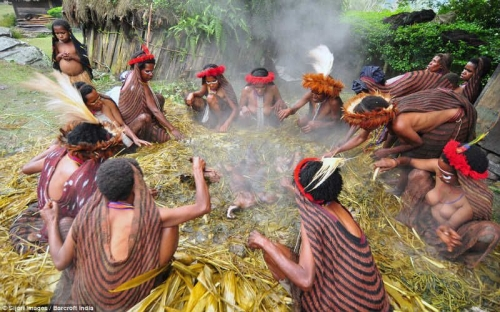
High in the central mountains of West Papua, where clouds cling to steep ridges and morning mist drifts slowly across fertile valleys, the Dani people have built a civilization shaped by altitude, agriculture, and deep communal bonds. For generations, they have lived in the Baliem Valley and surrounding highlands, cultivating the land, honoring their ancestors, and sustaining a cultural identity that remains profoundly resilient despite rapid change.
To understand Dani culture is to move beyond stereotypes and snapshots. It is to recognize a people whose traditions are not relics, but living systems of knowledge—rooted in land, memory, and collective responsibility. The Dani story is one of adaptation without erasure, of continuity shaped by choice rather than isolation.
A Valley That Sustains Life
The Baliem Valley lies more than 1,600 meters above sea level, enclosed by rugged mountains that long limited outside contact. This geography did not isolate the Dani; it nurtured self-sufficiency.
The valley’s rich volcanic soil supports intensive agriculture, particularly the cultivation of sweet potatoes, the staple food of Dani society. Over centuries, the Dani engineered sophisticated garden systems—raised beds, drainage channels, and rotational planting—that sustain dense populations without degrading the land.
Here, landscape is not scenery. It is livelihood, identity, and teacher.
Agriculture as Culture
Among the Dani, farming is not simply economic activity; it is social structure.
Sweet potatoes are cultivated primarily by women, while men clear fields, build fences, and tend pigs. This division of labor is complementary rather than hierarchical, reinforcing interdependence between genders and generations.
Pigs, in particular, hold immense cultural value. They are symbols of wealth, social status, and relational obligation. Pigs are not casually consumed; they are reserved for major ceremonies—marriages, alliances, reconciliations, and funerals.
To raise pigs well is to demonstrate responsibility to family and community.
The Honai: Architecture of Belonging
Traditional Dani villages are organized around honai, small round houses with thick thatched roofs and low entrances designed to conserve heat in the cool highland climate.
There are different honai for different purposes:
- Men’s honai, where elders teach history, strategy, and ritual knowledge
- Women’s honai, where children are raised and daily life unfolds
- Pig honai, underscoring the animal’s importance to social life
The honai is more than shelter. It is a space of learning, storytelling, and moral formation. Knowledge is transmitted through conversation, observation, and shared presence—often around a central fire that warms bodies and memories alike.
Community and Kinship
Dani society is organized around extended kinship networks rather than nuclear families. Identity is relational; a person is defined by their place within a web of ancestors, siblings, in-laws, and allies.
Decision-making is collective. Elders play a central role, not as rulers, but as custodians of memory and balance. Their authority comes from lived experience and the ability to mediate disputes, not from coercion.
Community cohesion is sustained through constant interaction—working gardens together, caring for pigs, sharing food, and participating in rituals that reaffirm mutual obligations.
Ritual, Conflict, and the Meaning of Balance
Historically, conflict played a visible role in Dani society. Inter-group warfare occurred, governed by ritualized rules rather than indiscriminate violence. These conflicts were often tied to land disputes, pig theft, or unresolved grievances involving ancestors.
Warfare, however, was never an end in itself. It existed within a broader framework of cosmic and social balance.
Equally important were mechanisms for reconciliation. Peace ceremonies, exchanges of pigs, and shared feasts restored harmony. Conflict and resolution were part of the same moral system—both aimed at maintaining equilibrium between people, land, and spirit.
Today, overt warfare has largely ceased, but the cultural emphasis on balance, accountability, and reconciliation remains deeply embedded.
Ceremony and Celebration
Dani ceremonies are among the most visually striking in the highlands. Festivals bring together multiple villages for days of ritual, dance, feasting, and exchange.
Participants adorn themselves with:
- feathers from birds of paradise,
- shell ornaments,
- body paint made from natural pigments,
- woven grass skirts and traditional accessories.
These adornments are not costumes. They are expressions of identity, signaling age, clan affiliation, and social role.
Dance movements often imitate animals or agricultural labor, reflecting the Dani worldview in which humans are inseparable from their environment.
Mourning and Memory
Perhaps one of the most misunderstood aspects of Dani culture historically has been their mourning practices. In the past, grief was expressed through intense, visible rituals that symbolized the depth of loss and communal responsibility.
While many of these practices have changed or disappeared over time—through internal evolution and external influence—the underlying values remain:
- grief is shared, not private;
- loss affects the whole community;
- memory requires action, not silence.
Modern Dani mourning blends tradition with contemporary practices, but the emphasis on collective healing endures.
Spiritual Worldviews
Before the widespread adoption of Christianity, Dani spirituality centered on ancestral presence and environmental spirits. The land was alive with meaning; mountains, rivers, and gardens held spiritual significance.
Today, Christianity is deeply integrated into Dani life, often practiced alongside traditional beliefs rather than replacing them. Churches serve as new communal spaces, echoing the social role once held exclusively by honai.
This synthesis reflects Dani adaptability: beliefs are not abandoned but reinterpreted through lived experience.
Oral Tradition and Knowledge Transmission
Dani history is preserved orally. Stories, genealogies, and moral lessons are passed down through repetition and participation rather than written records.
Elders recount:
- origins of clans,
- past conflicts and reconciliations,
- agricultural knowledge,
- lessons about humility, courage, and generosity.
Listening is a skill learned early. Silence, attention, and patience are signs of respect.
Encounters with the Outside World
Sustained contact between the Dani and the outside world began only in the mid-20th century. Missionaries, anthropologists, and administrators arrived, bringing schools, clinics, and new belief systems.
These encounters were complex. They introduced literacy and healthcare but also disrupted traditional authority structures and economic patterns.
Yet the Dani did not simply absorb outside influence. They selected, adapted, and reshaped it to fit local values.
The Dani Today: Between Continuity and Change
Modern Dani communities live at the intersection of tradition and transformation. Young people attend school, use smartphones, and engage with the wider Indonesian and global society.
At the same time:
- gardens are still cultivated,
- pigs remain central to ceremony,
- elders continue to teach,
- festivals continue to gather communities together.
Culture is not preserved by freezing it in time. It survives because people choose to carry it forward.
Challenges and Resilience
Like many Indigenous communities, the Dani face challenges:
- economic inequality,
- limited access to infrastructure,
- cultural misrepresentation,
- pressures of modernization.
Yet resilience defines Dani history. Their agricultural knowledge sustains food security. Their communal structures support social cohesion. Their cultural confidence allows adaptation without disappearance.
Why Dani Culture Matters
The Dani offer lessons beyond the highlands of Papua:
- that sustainability begins with respect for land,
- that community can outweigh individualism,
- that identity is strengthened through memory and shared responsibility.
In a world grappling with environmental degradation and social fragmentation, Dani ways of life present alternative models of belonging and balance.
A Closing Reflection
As the sun sets over the Baliem Valley and smoke rises from honai rooftops, the Dani world reveals itself not as something ancient and distant, but as something deeply human.
Children laugh near gardens. Elders speak quietly by the fire. Pigs grunt softly in their pens. Life continues—rooted in soil, shaped by memory, and sustained by community.
The Dani people are not a chapter from the past. They are a living culture, walking forward with the weight of history and the hope of continuity—on their own terms.
Categories

West Papua View All
This Blog has gone through many obstacles and attacks from violent Free West Papua separatist supporters and ultra nationalist Indonesian since 2007. However, it has remained throughout a time devouring thoughts of how to bring peace to Papua and West Papua provinces of Indonesia.


Papua ku keren